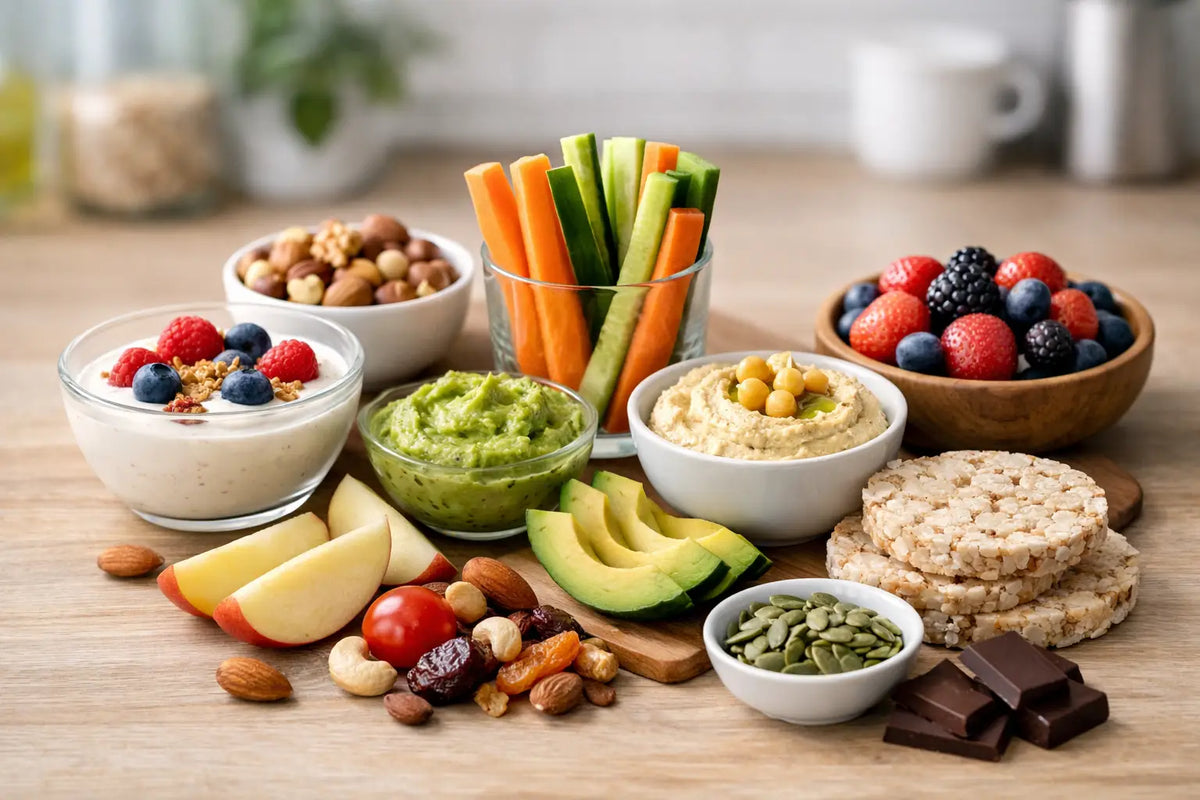
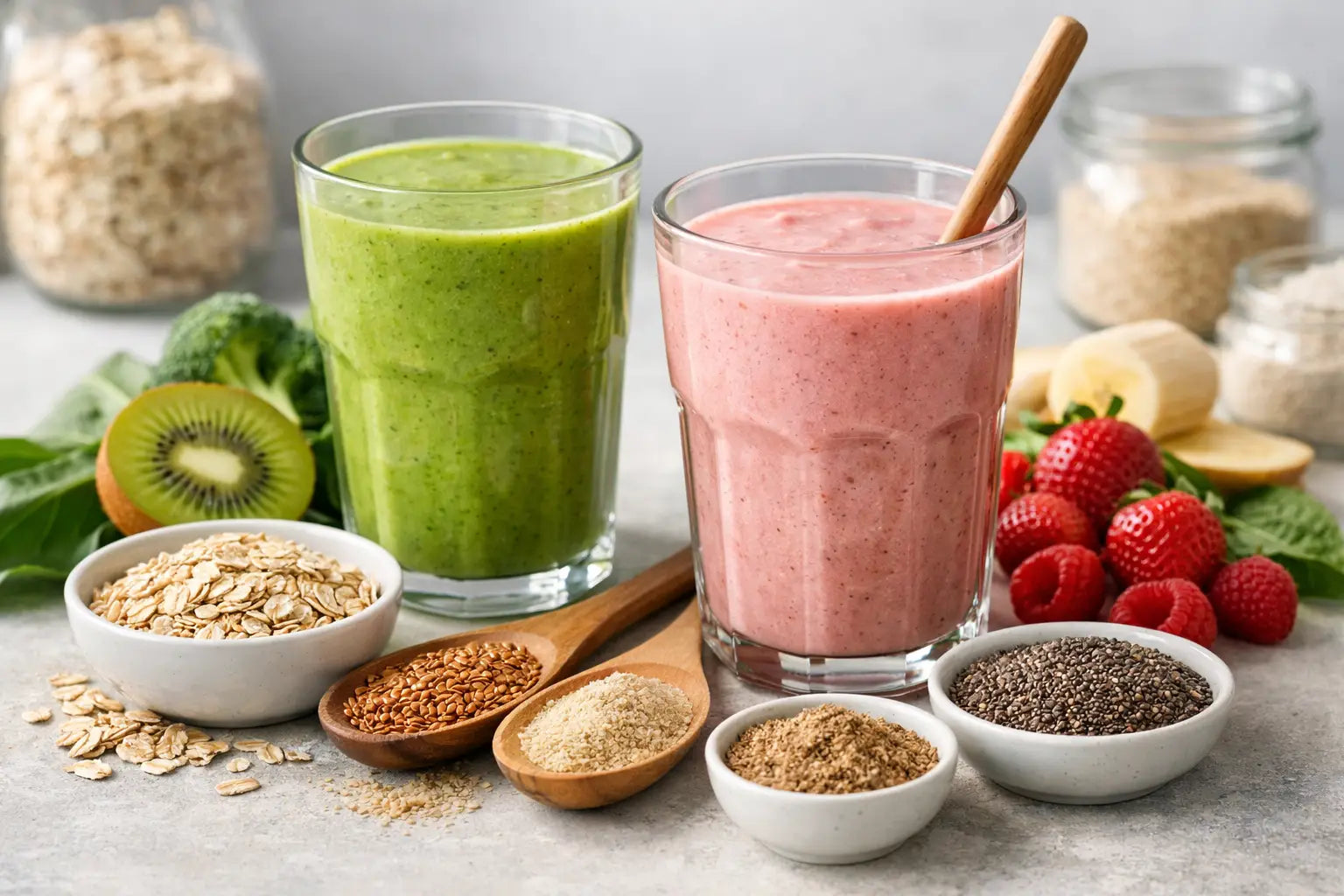
The afternoon snack autopilot is rarely a pure willpower issue. Often, breakfast or lunch simply lacks a component that makes meals last longer: fiber. But why do soluble fibers keep us feeling full longer than many other components of our diet? Because they influence several processes in the digestive tract that together determine how quickly you feel hungry again.
Soluble fibers can bind water, change their consistency, and serve as food for selected gut bacteria in the large intestine. While this sounds technical, it has a very practical effect: a meal often feels satisfying for longer. Not because fiber "magically removes" calories, but because it influences the dynamics around the stomach, blood sugar, and satiety signals.
How soluble fiber makes a difference in the body
Fiber consists of plant-based carbohydrates that our small intestine cannot digest or cannot fully digest. We broadly distinguish between insoluble and soluble forms. Both are part of a balanced diet, but they function differently.
Insoluble fibers, for example from whole grains, bran, or many vegetables, also bind water and increase stool volume. They are particularly relevant for regular digestion. Soluble fibers such as psyllium husks, inulin, pectin, or beta-glucans, on the other hand, can form viscous structures when in contact with liquid. It is precisely this property that is interesting for satiety.
It's important to clarify: "soluble" does not mean that every soluble fiber has an identical effect in the body. Some form gels particularly well, while others are more strongly fermented by gut bacteria. The quantity, the overall meal, and your individual tolerance also play a role.
They form a viscous structure
When soluble, viscous fibers meet water, a gel-like mass forms in the stomach and intestines. Don't imagine it as a solid block, but rather as a more viscous meal. This structure can increase the volume in the stomach and slow down the transport of food.
Stretch receptors in the stomach register, among other things, fullness and volume. They send signals to the brain that contribute to the feeling: I have eaten, I am satisfied for now. Liquid is crucial here. If you consume fiber without drinking enough, this effect cannot be optimally utilized and tolerance may suffer.
Gastric emptying can be slower
How quickly food leaves the stomach influences when we feel hungry again. A very liquid, low-fiber meal can move through the stomach quickly. With a meal containing gel-forming soluble fibers, gastric emptying can be slower. This often leads to a longer-lasting feeling of satiety.
This is not a guarantee against hunger for many hours. A small portion of fruit alone, despite pectin, will have a different effect than a breakfast of yogurt or skyr, oats, berries, nuts, and a source of soluble fiber. Protein, fat, meal size, and eating speed always count. Soluble fiber is not a solo act, but a particularly effective part of the overall picture.
Why soluble fiber can keep you full longer
A second key lies in how the body handles carbohydrates. When the chyme is more viscous, carbohydrates tend to reach digestive enzymes and the bloodstream more slowly. The blood sugar rise after a meal can therefore be flatter. The subsequent insulin response can also be more even.
For your everyday life, this doesn't mean you have to constantly monitor your blood sugar. It's about what many people feel: fewer rapid energy highs, followed by a sharp dip and the feeling of urgently needing something sweet. Especially with breakfasts that previously consisted mainly of fast-acting carbohydrates, more soluble fiber quality can make a noticeable difference.
Satiety is more than a full stomach
Satiety is not just caused by mechanical fullness. Hormones from the intestine, including GLP-1 and PYY, are also involved in appetite regulation. Soluble fibers can indirectly influence this, especially when they are fermented in the large intestine.
There, certain gut bacteria process fermentable fibers into short-chain fatty acids such as acetate, propionate, and butyrate. These metabolites are relevant for the gut environment and are also linked to signals that help regulate energy balance and the experience of satiety. Research in this area continues to evolve. But one thing is clear: the gut is not a passive tube, but an active communication system.
How strong this effect is for you depends, among other things, on your microbiome. Two people can react differently to the same amount of fiber. Therefore, it's worth not looking for the perfect food, but building a routine that you can tolerate well in the long term.
The fiber gap often becomes noticeable between meals
The German Nutrition Society recommends at least 30 grams of fiber per day for adults. Many people do not reach this value in their daily lives. This is rarely because they don't care about their health. Meetings, commuting, spontaneous lunches, and quick dinners make it easy for bread, pasta, or snacks to dominate meals, while legumes, whole grains, vegetables, fruits, and seeds are neglected.
A typical example: a croissant and a coffee provide short-term energy, but hardly any volume, protein, or fiber. Hunger in the late morning is then not a character weakness, but understandable. If you supplement your breakfast with oats, berries, a protein source, and soluble fiber, the starting position changes. The meal has more structure and can sustain you longer.
The principle is also practical at lunchtime: a bowl with rice becomes more filling if it also contains beans or lentils, vegetables, a protein source, and a dressing with some fat. Soluble fiber is not a substitute for whole foods. It helps to specifically close the daily fiber gap when everyday life doesn't always go by the book.
How to integrate them into your daily ritual
The best strategy is not maximum, but consistent. If you currently eat little fiber, gradually increase the amount. Your gut needs time to adapt. Too large jumps can cause bloating, a feeling of pressure, or altered bowel movements - especially with highly fermentable fibers.
For example, start with a small portion in a meal that is already part of your routine. Soluble fibers fit into overnight oats, yogurt, smoothies, porridge, or even savory dishes. A neutral-tasting mixture like the Innerpure Clear Fiber Blend can be particularly easy to integrate into drinks or meals. The crucial factor is not the perfect timing, but maintaining regular use.
Make sure to drink enough fluids throughout the day. If you supplement with fiber but drink little, you not only miss out on the gel-forming effect. The gut can also react more sensitively. Individual medical clarification is advisable if you have chronic gastrointestinal complaints, suffer from an intestinal disease, take medication, or notice new, persistent complaints.
A satisfying meal follows a simple logic
For long-lasting satiety, meals don't have to be complicated. Combine a source of complex carbohydrates with protein, healthy fats, plant diversity, and fiber. An apple with nut butter is usually more sustainable than apple juice. Oatmeal with yogurt and berries generally keeps you full longer than sugary cornflakes. And a pasta meal benefits significantly if vegetables, legumes, or a fiber source are also on the plate.
However, more is not automatically better. If you already eat a lot of fiber, you may not need large additional amounts. If you are sensitive to certain fibers, you will benefit more from a slower increase or a different fiber composition. Your goal is not a maximally full stomach, but a diet that keeps you pleasantly full, performing well, and well-nourished throughout the day.
Soluble fiber does not work dramatically like an energy drink. Its advantage lies precisely in its calm: it can make a quick meal more stable and provide reliable daily support for your digestion. A glass of water, a good breakfast, a fiber routine - often these small, repeatable decisions are what give cravings less room.