The green smoothie looks healthy, but often only keeps you full until the first meeting. While fruit, spinach, and plant-based milk provide valuable nutrients, the amount of fiber can be surprisingly modest depending on the ingredients. Adding fiber to smoothies is therefore an easy way to turn a quick drink into a ritual that meaningfully supplements your daily intake – without unnecessarily changing the taste or consistency.
The German Nutrition Society recommends at least 30 grams of fiber per day for adults. Many people do not reach this value in their daily lives: breakfast on the go, few legumes, refined grain products, and a hectic daily schedule quickly create the gap. A smoothie does not replace a balanced diet. However, if properly prepared, it can be a reliable building block.
Why fiber in smoothies makes sense
Fiber is plant-based food components that are not or only partially digested in the small intestine. Soluble fiber, in particular, can bind water and is fermented by gut bacteria in the large intestine. This produces, among other things, short-chain fatty acids, which are associated with healthy gut function in research.
For your daily life, the practical effect is particularly relevant: a fiber-rich smoothie can keep you full longer than a pure fruit smoothie and flatten the blood sugar spike after a meal. This can help to better manage the well-known mid-morning slump and spontaneous cravings. However, how much you feel this depends on your entire meal, your energy needs, and your individual digestion.
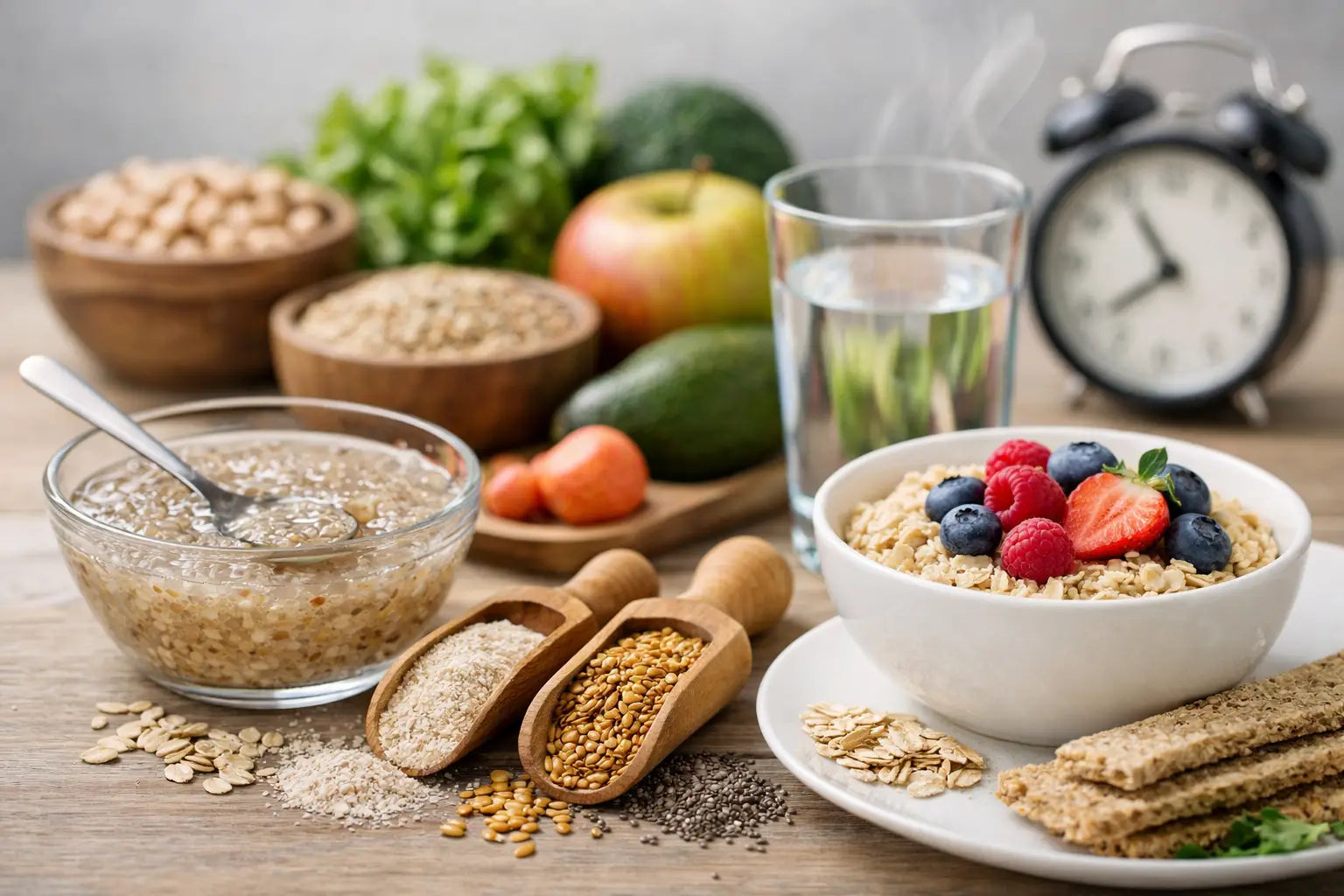
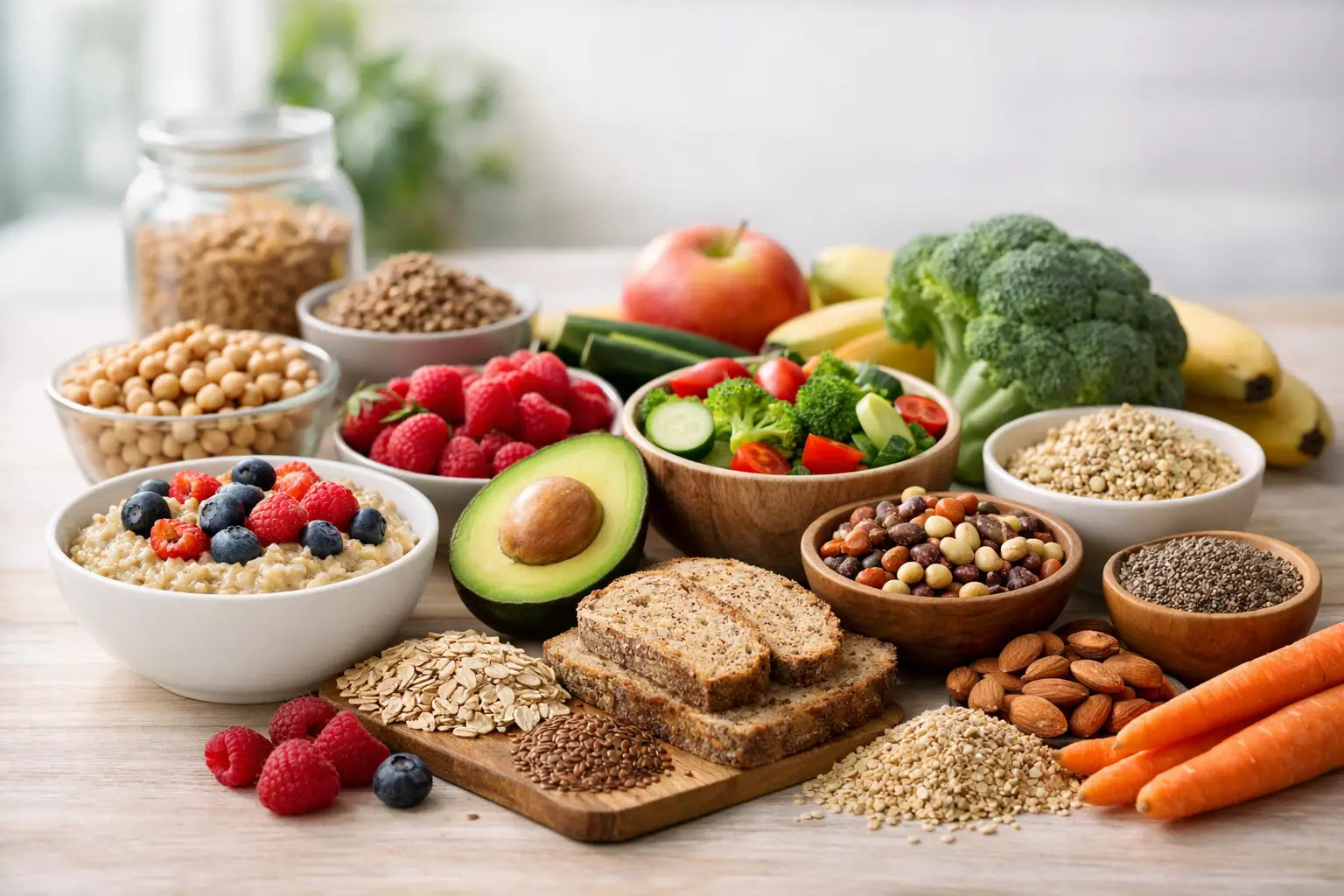
Variety is also important. Oats, flaxseeds, berries, legumes, and selected soluble fibers bring different properties. If you don't want to deal with several ingredients every morning, you can use a neutral-tasting fiber mix. It makes it easier to keep the routine consistent.
Adding fiber to smoothies: the right base
The best smoothie doesn't need a long list of ingredients. The decisive factor is the ratio of liquid, natural fiber sources, protein, and a fiber supplement if you want to specifically increase your intake. This way, you don't get a sweet drink, but a meal or a filling snack with structure.
Water, unsweetened plant-based milk, kefir, or plain yogurt are suitable as liquids, depending on what you tolerate and how creamy you want your smoothie to be. A portion of berries, half a banana, or some mango add flavor. Berries are often the clever choice because they contain less sugar and more fiber compared to many other fruits.
Oats, finely ground flaxseeds or chia seeds provide more substance. They deliver fiber, but also change texture and taste. Those who prefer a particularly smooth, light consistency in the morning or mix on the go often find it easier to achieve their goal with a finely soluble mixture. Innerpure's Clear Fiber Blend, for example, can be stirred into cold drinks without affecting the taste and thus fits into a smoothie without reinventing the recipe.
How to mix without lumps
First, add the liquid to the blender, then fruit, vegetables, and creamy ingredients. Powdered fiber should ideally be added last. Blend everything thoroughly for about 30 to 45 seconds. For very fine, highly soluble fibers, a shaker or a glass with a whisk is often sufficient.
Don't drink the smoothie immediately, but give it one to two minutes. Some fibers only bind liquid after a short time. If your drink becomes too thick, simply add a little water. If it becomes too thin, a few oats, frozen zucchini, or a spoonful of yogurt will help. This way you will find a consistency that you really enjoy drinking every day.
A common mistake: adding fiber to an already very thick smoothie with a lot of banana, nut butter, oats, and chia seeds. While this can be filling, it can sit heavily in some people's stomachs. Especially if you have previously eaten a low-fiber diet, less is often the better start.
Increase the amount slowly
Your gut likes change, but not always abruptly. Therefore, increase the amount of fiber gradually and make sure to drink enough water throughout the day. Too much at once can temporarily lead to bloating, a feeling of pressure, or altered bowel movements. This is not automatically a sign that fiber doesn't agree with you - often the digestive system simply needs time to adjust.
Start with a small portion of the chosen ingredient or mixture and observe for a few days how you feel. Especially with sensitive digestion, irritable bowel syndrome, or existing gastrointestinal diseases, a cautious start is worthwhile. In case of persistent complaints or medical questions, medical advice should come first.
Three smoothie ideas for your fiber routine
A good everyday smoothie should be uncomplicated. These combinations work because they bring together taste, protein, and fiber:
- Berry Vanilla: Unsweetened almond milk, a handful of berries, plain yogurt or Skyr, a little vanilla, and a portion of soluble fiber. Fresh, creamy, and ideal as a quick breakfast.
- Green and mild: Water or plant-based milk, half a banana, baby spinach, cucumber, lemon juice, yogurt, and a portion of fiber blend. The banana rounds off the green ingredients without making the smoothie too sweet.
- Cocoa Oat: Milk or plant-based milk, half a banana, oats, unsweetened cocoa powder, Skyr, and fiber. This variant is particularly suitable if you want a little more substance after training or on long office days.
- Apple Cinnamon: Kefir or yogurt, a small apple with skin, oats, cinnamon, and a portion of soluble fiber. The smoothie tastes familiar, but provides significantly more than a classic apple drink.
What a smoothie doesn't have to do
A fiber smoothie is not a detox and not a shortcut to a balanced diet. Your gut benefits from variety in the long term: vegetables, fruits, whole grains, legumes, nuts, and seeds should continue to be on your plate regularly. Chewing also has benefits for satiety and eating behavior - a drink cannot replace every solid meal.
The advantage lies elsewhere: a smoothie reduces the friction of a good decision. If you have little time in the morning or your afternoon routine goes awry, you have an easy way to consciously supplement your fiber intake. Not perfect, but repeatable.
So make it easy for yourself: get your blender, ingredients, and glass ready, choose a recipe that you really like, and start with an amount that feels good. The most effective routine is not the most complicated one - but the one that fits into your everyday life even on a busy Wednesday.