A comparison of soluble and insoluble fiber quickly shows: it's not an either/or situation. Both forms fulfill different functions and complement each other in everyday life. Those who want to support their digestion, stay pleasantly full for longer, and close the daily fiber gap benefit most from variety – not from a single "miracle fiber."
Many adults in Germany do not meet the recommendation of at least 30 grams of fiber per day. This is rarely due to a lack of knowledge. Between meetings, commuting, quick lunches, and dinners, fiber-rich choices often fall by the wayside. It is all the more helpful to understand the role soluble and insoluble fiber play – and how they can be easily integrated into your routine.
What fiber actually does in the body
Dietary fiber is carbohydrates from plant-based foods that are not digested or only partially digested in the small intestine. They therefore pass into the large intestine, where they can bind water, affect stool volume, or be fermented by gut bacteria.
The classification into "soluble" and "insoluble" is practical, but not absolute: Many foods contain both types simultaneously. Oats, for example, provide soluble beta-glucans, but also insoluble components. The same applies to legumes, fruits, vegetables, and whole grains. The key is therefore less about perfectly categorizing every meal, but rather regularly combining different plant sources.
Comparison: soluble and insoluble fiber
Soluble fiber: water binding and food for the microbiome
Soluble fiber dissolves in water and can form a viscous, gel-like structure. These include beta-glucans from oats and barley, pectins from apples and citrus fruits, inulin from chicory or Jerusalem artichoke, and certain plant gums.
In the digestive tract, they can slightly slow down gastric emptying. This can help a meal to be more satiating for longer and to prevent blood sugar from rising too sharply after eating. However, how pronounced this effect is depends on the amount, the type of fiber, and the entire meal. A sweet pastry does not automatically become a balanced breakfast with a spoonful of fiber.
Many soluble fibers are metabolized by microorganisms in the large intestine. This produces short-chain fatty acids, which are relevant as metabolic products for the gut environment. This is precisely where it becomes clear why fiber is more than just a topic for regular bowel movements: it is also part of the nutrition of our microbiome.
The downside: those who switch from a very low-fiber diet to large amounts of fermentable fibers may initially experience bloating, rumbling, or a feeling of fullness. This is not necessarily a sign that fiber is "not tolerated." Often, the gut simply needs time. Small steps and sufficient fluids are then more sensible than a radical start.
Insoluble fiber: structure for regular digestion
Insoluble fiber hardly dissolves in water. However, it binds liquid, increases stool volume, and can support intestinal transit. Typical sources include wheat bran, whole grains, nuts, seeds, vegetables, and the skins of many fruits.
Its greatest advantage lies in its structure. It can be particularly helpful when the diet has previously contained little whole grains, vegetables, and legumes, and the stool is rather sluggish or firm. Here, too, the rule is: the effect needs water. Those who significantly increase their fiber intake but drink little can feel bloated or constipated.
Insoluble fiber is not inherently "better for digestion" than soluble. For some people with sensitive bowels, coarse bran or very large amounts of raw food can exacerbate symptoms. In these cases, finer whole grain products, cooked vegetables, and a slower increase are often the more pleasant choice.
Which foods provide which fiber?
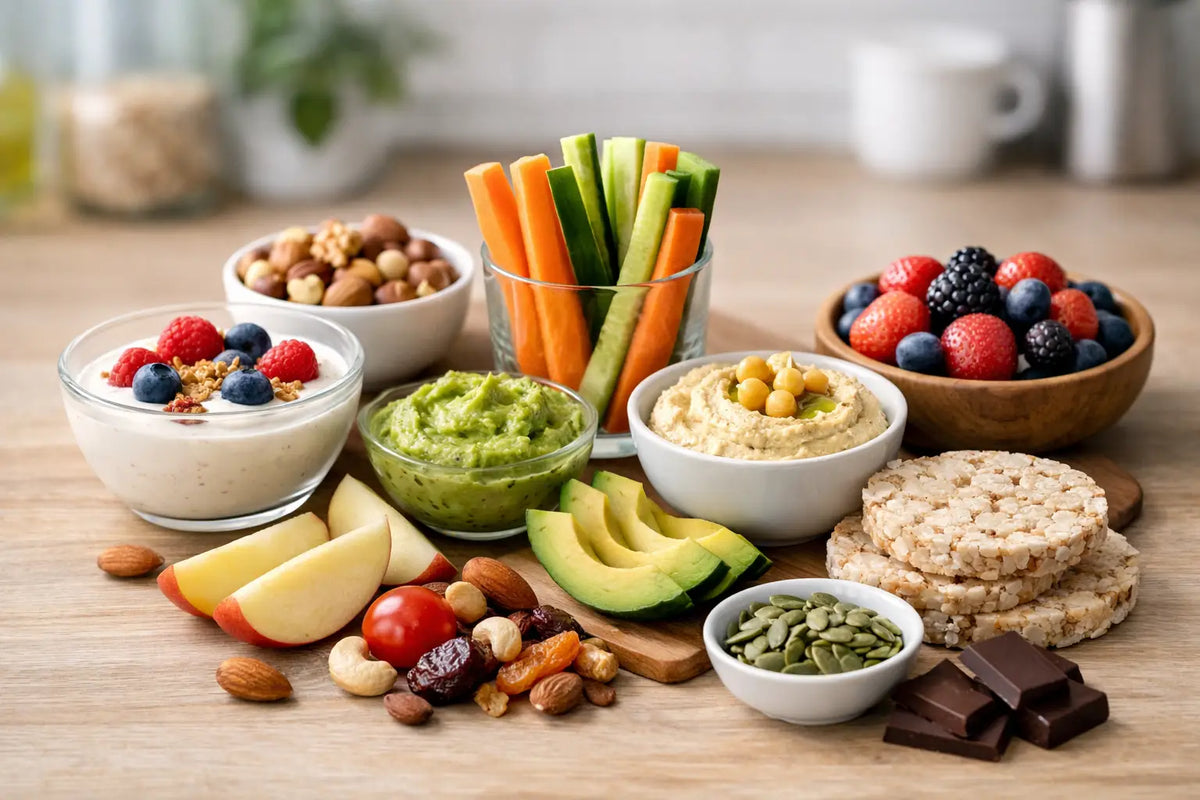
In everyday life, you don't have to calculate every single fiber. A varied plate usually automatically combines both forms. Oatmeal with berries, nuts, and yogurt, for example, provides soluble beta-glucans, pectin, and insoluble plant fibers. A lentil salad with vegetables and whole grain bread works similarly.
Good examples of soluble fiber include oats, barley, legumes, apples, citrus fruits, berries, flaxseeds, and psyllium husks. Insoluble fiber is found particularly in whole grain bread, brown rice, bran, nuts, seeds, cabbage, carrots, and many vegetable and fruit skins.
Preparation changes digestibility, but not the principle. Cooked lentils are easier to digest for many people than large amounts of raw vegetables, while an apple with its skin provides more structure than applesauce. It depends on your daily life, your taste, and your individual digestion.
What is better: soluble or insoluble fiber?
The short answer: neither type wins the comparison. Soluble fiber is particularly interesting for satiety, the composition of the microbiome, and a more even response to meals. Insoluble fiber primarily supports stool volume and regularity. Your body benefits from both.
If your goal is greater satiety in your working day, oats, legumes, flaxseeds, or a well-tolerated mixture of soluble fibers can be a sensible focus. For rather sluggish digestion, it is also worth looking at whole grains, vegetables, sufficient fluids, and exercise. For frequent bloating, abstinence is not the first solution, but rather speed: reduce the amount, increase gradually, and find individually tolerable sources.
People with chronic inflammatory bowel diseases, severe persistent abdominal pain, unexplained changes in stool, or diagnosed strictures in the bowel should have their fiber intake medically clarified. Even with irritable bowel syndrome, the tolerability of certain fermentable fibers can vary greatly.
How to combine fiber without a complicated diet plan
The most effective approach is not to eat as much as possible in one day. A stable supply is created through repetition. First, supplement one meal that already takes place daily: oatmeal for breakfast, whole grain instead of white flour for lunch, or a portion of legumes for dinner.
Increase the amount over one to two weeks and make sure to drink enough. Water helps fiber to exert its properties in the digestive tract. Exercise, regular meals, and enough time to eat are also part of it – gut health is not a single trick.
If fresh cooking is not realistic every day, a flavor-neutral fiber mix can be a practical supplement. It does not replace vegetables and a varied diet, but it can help to reliably reduce the gap between aspiration and everyday life. A combination of different soluble fibers, as Innerpure also pursues in its Clear Fiber Blend, therefore fits well into water, coffee, smoothies, or your daily breakfast.
The better measure: variety, tolerability and routine
Instead of asking yourself whether soluble or insoluble fiber is better, ask yourself: which fiber-rich habit do I truly maintain every day? A breakfast with oats, an extra vegetable at dinner, or a fixed drink ritual can change more in the long run than the perfect plan that ends after three days.
Give your gut time, observe your individual tolerability, and rely on various plant sources. The best fiber strategy is one that feels good, fits into your everyday life, and is just as easy to achieve again tomorrow.