Breakouts, redness, or a dull complexion rarely have just one cause. Sleep, stress, hormones, skincare, medication, and diet can all play a role simultaneously. The skin and gut connection is therefore not a quick explanation for every skin issue, but it is an exciting piece of the puzzle: What happens in the gut can influence processes that also become visible on the skin.
The good news is that instead of relying on radical detox cures or ever new active ingredients, the foundation can be strengthened specifically in everyday life. A fiber-rich diet, regular meals, and a compatible routine are not a guarantee for flawless skin. However, they can create conditions under which the gut and skin work better.
Skin and Gut Connection: The Body's Link
The gut and skin are connected in several ways. Billions of microorganisms live in the gut, often collectively referred to as the gut microbiome. They help process indigestible food components, interact with the immune system, and produce metabolic products. If this interplay gets out of balance, it can influence inflammatory processes in the body - and thus theoretically also the skin.
An important factor is the gut barrier. It separates the gut contents from the inside of the body and helps decide which substances are allowed to pass through. A diverse diet with sufficient fiber supports a gut environment in which beneficial microorganisms find good conditions. The skin barrier performs a similar task: it protects against moisture loss and external irritants. Both systems are not identical, but both benefit from a stable, well-supplied foundation.
The immune system also connects the two organs. A large part of its activities takes place around the gut. Signals from the gut can therefore influence the immune response throughout the body. This explains why researchers also look at the microbiome in inflammatory skin diseases, acne, or rosacea. However, it does not mean that a specific gut change is automatically the cause of a skin condition.
Short-chain fatty acids as key metabolites
Soluble and fermentable fibers serve as food for certain gut bacteria. Their processing produces, among other things, short-chain fatty acids such as butyrate, acetate, and propionate. These metabolites are being intensively studied scientifically because they can support the gut barrier and immunological processes.
For the skin's appearance, this does not lead to a simple equation like: More fiber equals clear skin. The connections are individual, and research continues to evolve. Nevertheless, the supply of fiber is one of the most sensible, everyday levers because it can positively influence not only the gut but also satiety and blood sugar regulation.
What Research Says About the Skin and Gut Connection
The idea of a gut-skin axis is biologically plausible and scientifically well-founded. Studies show connections between the composition of the gut microbiome, inflammatory markers, and various skin conditions. Especially in acne, atopic dermatitis, and psoriasis, research is being conducted into whether changes in the microbiome play a role.
It is important to classify: Many studies show associations, but not yet a clear cause-and-effect chain. People with a skin disease may have a different microbiome. Whether this microbiome exacerbates the symptoms, is a consequence of the disease, or both occur simultaneously cannot always be clearly separated.
Dietary supplements with probiotics are also being investigated. Individual studies provide interesting insights, but the results depend heavily on the bacterial strain used, the dose, the duration, and the respective initial situation. A product that may be useful for one person does not necessarily have the same effect for everyone. A broad nutritional basis therefore remains more relevant than the next short-term hype.
Why Fiber is Interesting for Gut and Skin
The German Nutrition Society recommends adults at least 30 grams of fiber per day. Many people do not reach this amount in everyday life. Between quick breakfasts, lunch at the desk, and dinner on the go, the fiber gap often goes unnoticed - until digestion, satiety, or energy levels feel less stable.
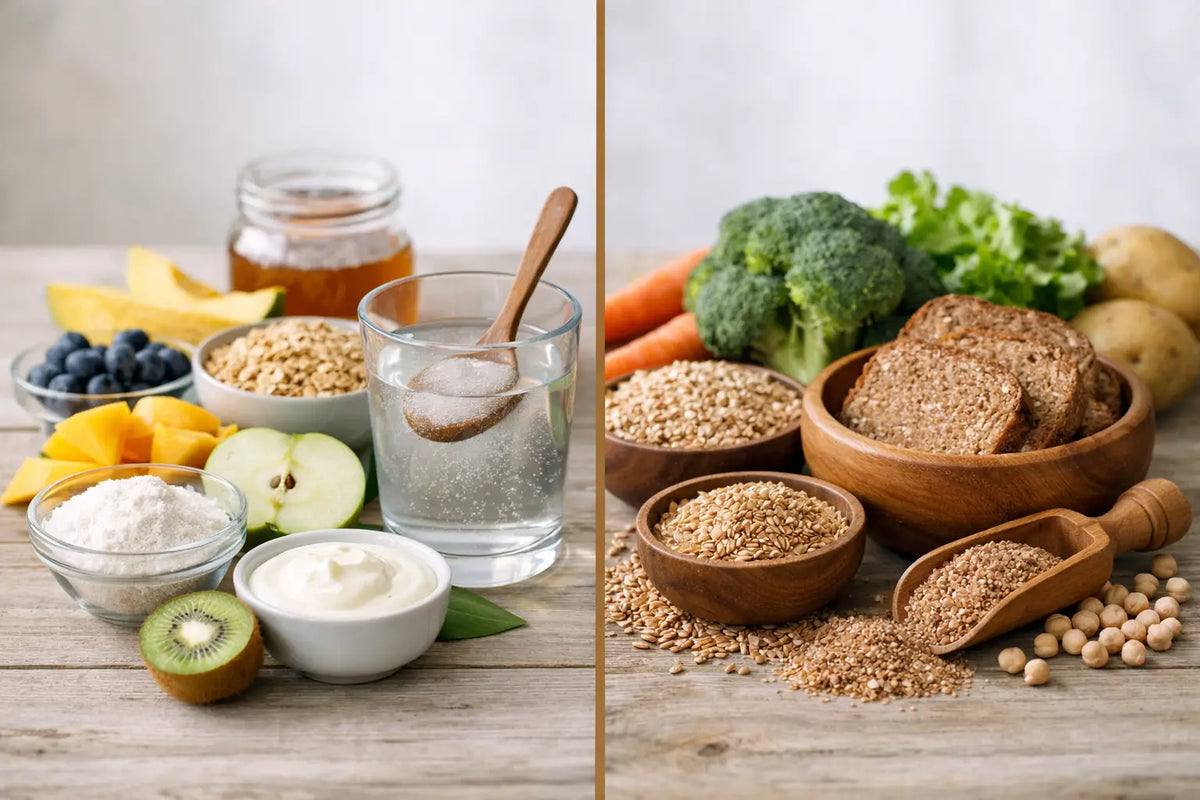
Fiber occurs naturally in whole grains, legumes, vegetables, fruits, nuts, and seeds. They are not a uniform substance. Some bind water, others are more strongly fermented in the large intestine, and still others primarily support stool volume. It is precisely this variety that makes a varied diet so valuable.
For the skin, fiber should not be understood as a beauty active ingredient. Its potential lies indirectly in supporting a well-supplied gut microbiome and a more balanced dietary routine. Those who regularly eat fiber-rich meals also often replace highly processed, sugary snacks with nutrient-dense foods. This can also be a relevant difference depending on the individual's diet.
A Routine That Works in Real Everyday Life
A healthy gut routine doesn't have to be complicated. What matters less is a perfect day than repetition over weeks. If you rarely eat fiber, you should slowly increase the amount. Otherwise, bloating, pressure, or abdominal pain can occur. Drinking enough water at the same time helps, especially with swelling fibers.
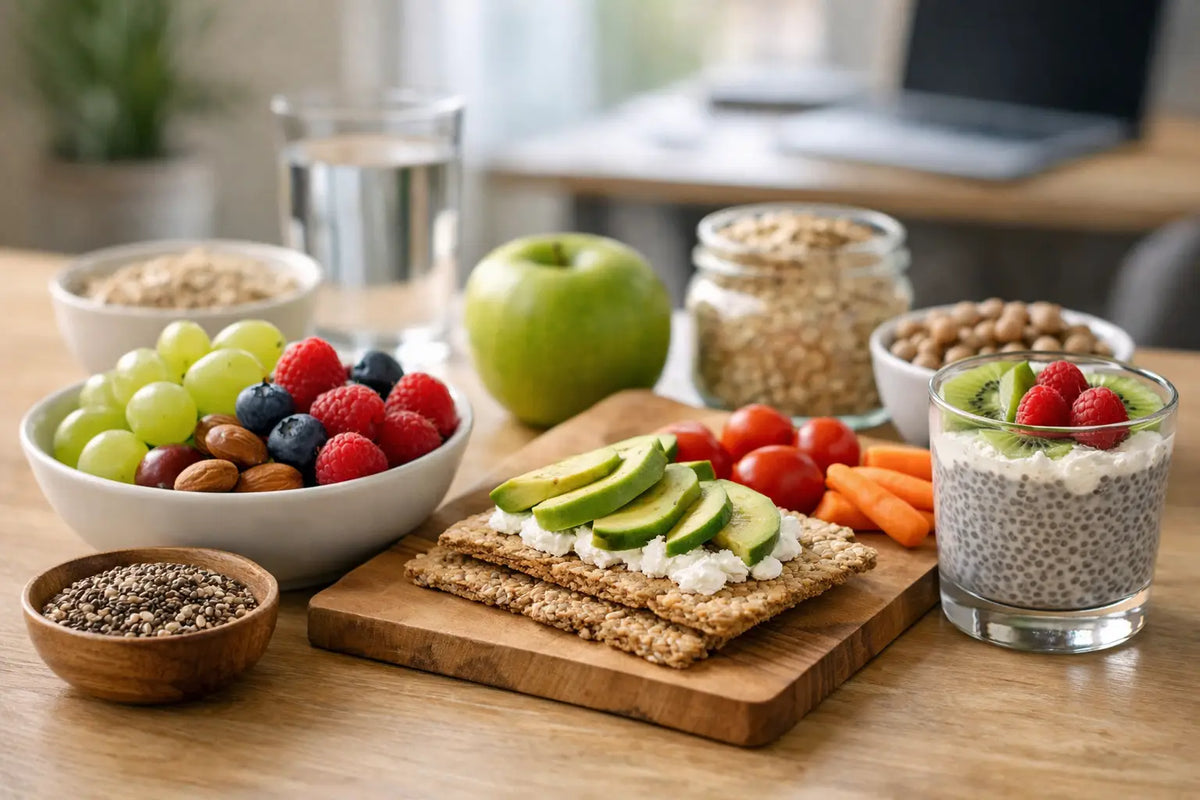
It becomes practical when fiber docks onto existing habits: oatmeal or berries for breakfast, a portion of legumes for lunch, and vegetables as a fixed part of dinner. If fresh planning is not realistic every day, a taste-neutral fiber mixture can be integrated into coffee, smoothies, yogurt, or a meal. Innerpure's Clear Fiber Blend is formulated precisely for this uncomplicated ritual moment.
Pay attention to four things:
- Increase fiber gradually rather than overnight.
- Drink enough water throughout the day.
- Combine different sources instead of relying on a single food.
- Observe what suits you personally - especially with irritable bowel syndrome or known intolerances.
Skincare Remains Part of the Overall Picture
Focusing on the gut does not replace good skincare. Gentle cleansing, suitable UV protection, and active ingredients that match the skin's condition remain central pillars. For acne, for example, hormones and sebum production may be more important than diet. For rosacea, alcohol, heat, or spicy foods can be triggers. For atopic dermatitis, genetic factors and the skin barrier play a major role.
Precisely for this reason, a holistic view is helpful: do not view the skin in isolation, but also do not make the gut responsible for everything. Those who consider sleep, stress management, care, and nutrition together avoid unrealistic expectations and are more likely to find a routine that is sustainable in the long term.
More beautiful skin doesn't necessarily start with a new serum. Sometimes it starts with a more regular breakfast, an extra portion of plant diversity, and a fiber routine that remains simple even on busy days.