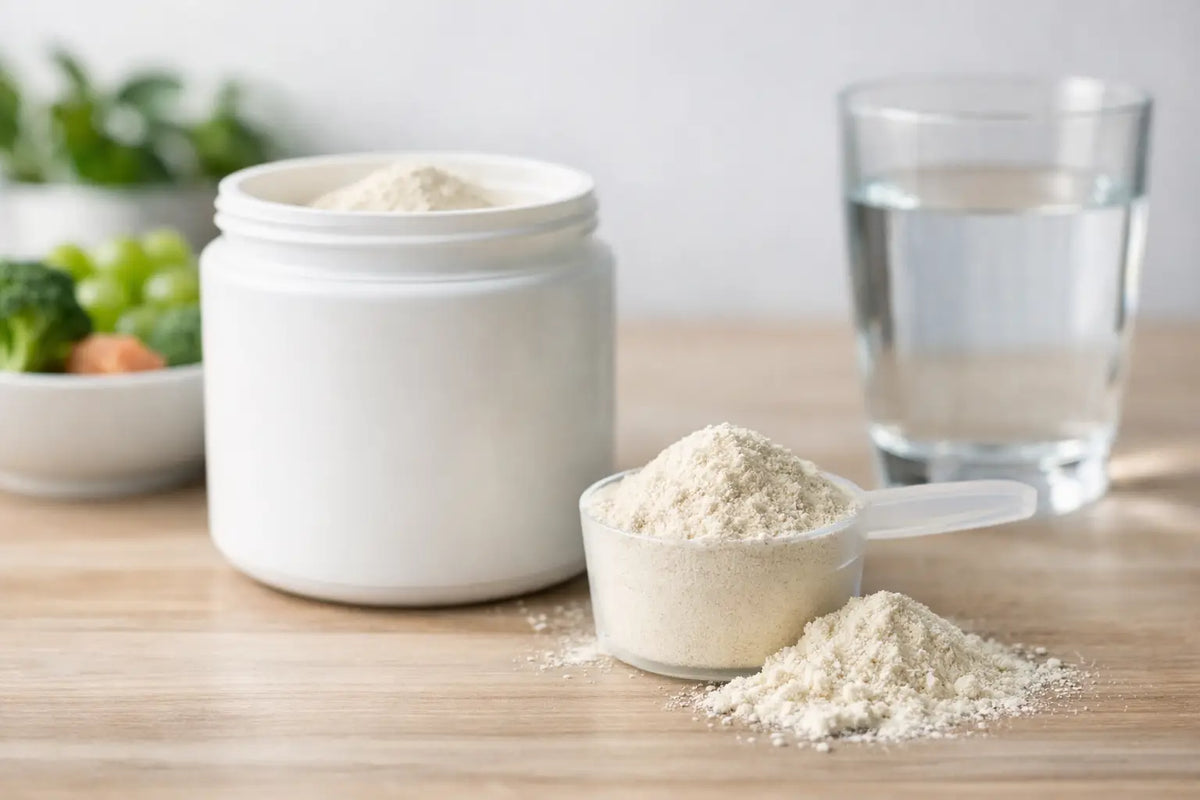
A glass of water with your fiber drink is a good start. However, it's crucial to adjust your fluid intake when consuming fiber if you significantly increase your intake. This is because fiber doesn't work in isolation in the gut: it binds water, swells, or is fermented by gut bacteria. This can positively support your digestion – provided your body is given time and enough fluid to get used to the new routine.
Especially if you haven't eaten much fiber before, the solution doesn't have to be: eat as much as possible overnight and drink several liters of water. A clear, relaxed approach is better. Small steps, regular portions, and paying attention to your personal signals will get you further than rigid rules.
Why fiber and fluids belong together
Fiber consists of plant-based food components that are not or hardly digested in the small intestine. In the large intestine, they perform various tasks. Some, especially soluble fibers, form a gel-like structure with water. This can help keep the intestinal contents smoother and digestion more regular. Other fibers primarily increase stool volume.
Fluid is relevant for both processes. If it's lacking, a higher fiber volume can feel uncomfortable for some people: for example, due to abdominal pressure, harder stools, or constipation. This doesn't mean that fiber is the problem. Often, the amount was increased too quickly, the drinking routine remained the same, or daily life brings other factors, such as little exercise, stress, travel, or certain medications.
The German Nutrition Society recommends adults consume at least 30 grams of fiber per day. Many people do not reach this value. Therefore, those who want to close their personal fiber gap should not only look at gram counts but also consider fluid intake.
Adjusting your fluid intake with fiber: Here's how
There isn't one fluid intake that applies to everyone. Body size, temperature, exercise, diet, pregnancy, breastfeeding, and health conditions change requirements. A practical guideline for everyday life is about 1.5 liters of beverages per day, supplemented by fluids from foods such as vegetables, fruits, soups, or yogurt. In hot weather or during exercise, your needs can be significantly higher.
If you increase your fiber intake, for example, by eating more legumes, whole grains, vegetables, seeds, or a daily fiber supplement, it makes sense to consciously incorporate an additional drinking habit. This doesn't have to be a complicated plan. Drink your glass directly with the supplement and distribute other beverages throughout the day, instead of hastily catching up with large amounts in the evening.
For example: You add a portion of soluble fiber to your coffee or smoothie in the morning. Then a large glass of water with it can be your new basis. If you take the portion later with a meal, a drink with it and a water bottle within reach for the afternoon also works. The goal is not a perfect number, but a routine that you implement daily.
Don't increase everything at once
If you have previously eaten little fiber, gradually increase the amount over one to two weeks. If you simultaneously increase your supplement portion, eat more whole grains, plan beans daily, and additionally test psyllium husks, it can be difficult to recognize what is currently too much for your stomach.
Start with one change instead. Then observe how bowel movements, gut feeling, and satiety develop. If you tolerate the routine well, you can take the next step. This approach is particularly useful for a sensitive gut or if you tend to suffer from bloating.
How to tell if your routine fits
Your body usually provides better clues than an app. A suitable combination of fiber and fluid often shows up in regular digestion and stools that are neither noticeably hard nor very soft. A calmer gut feeling after getting used to it can also be a good sign.
Temporarily more gas, on the other hand, is not automatically negative. Soluble, fermentable fibers serve as food for certain gut bacteria. Gases are produced during this process. If the discomfort is mild and subsides after a few days, this often indicates an adaptation. If bloating, cramps, or feelings of fullness become stronger, first reduce the amount of fiber a little and then only slowly increase it again.
The color of your urine can also provide a rough guide. Very dark yellow urine can indicate insufficient fluid intake, especially if you have drunk little or sweated. However, it does not have to be completely colorless. It's about continuous supply, not about overwhelming your body with water.
Drinking more isn't always the whole answer
The recommendation to drink enough fluids with fiber makes sense. However, it is not an invitation to generally drink as much as possible. Drinking far beyond your own needs does not automatically improve digestion. Too much fluid in a short time can even be stressful.
Furthermore, fluid intake and fiber do not solve every digestive issue. Persistent constipation can be caused by lack of exercise, a very one-sided diet, stress, an altered daily rhythm, or medication. Even with diarrhea, blindly increasing fiber isn't always appropriate. Here, the type of fiber, overall diet, and underlying cause are important.
For known kidney, heart, or liver diseases, the permitted fluid intake may be medically restricted. In such cases, you should clarify changes to your fluid and fiber routine with a doctor beforehand. This also applies to severe, new, or persistent symptoms, blood in the stool, unintentional weight loss, or severe pain.
Practical ways to a stable drinking routine
Water doesn't have to be boring to become a habit. Still or sparkling water, unsweetened teas, and diluted juice spritzers can provide variety throughout the day. Coffee generally also contributes to fluid intake, but it doesn't replace every water break – especially not if several cups characterize your daily routine.
Make the right choice visible: Place a filled bottle at your workplace in the morning, have a drink with every meal, and combine your fiber moment with a fixed ritual. A taste-neutral solution like Innerpure's Clear Fiber Blend, for example, can be integrated into water, coffee, smoothies, or meals. It remains crucial that you stir the portion in well, consume it promptly, and don't treat fluid as an afterthought.
On days with sports, summer heat, or long journeys, you can consciously adjust. Don't wait exclusively for intense thirst. Smaller amounts throughout the day are more tolerable and easier to implement for many people than a large drinking amount all at once.
Fiber works best as part of a system: varied plant-based foods, regular exercise, sufficient sleep, and a drinking routine that suits your life. Start where you are. An extra glass of water and a more consistent fiber portion can already be the beginning of a ritual that feels good every day.