The second coffee is settling in, breakfast was quick, and there's little time between meetings for a proper meal. This is often where the success of daily fiber intake is decided. Prebiotic foods in everyday life are not a complicated dietary rule, but a simple way to regularly supply beneficial gut bacteria with nourishment.
The goal isn't perfection on the plate. It's about repeatable choices: breakfast with oats, legumes in your lunch bowl, cooled potatoes for dinner. Small building blocks that can add up to a gut routine.
What prebiotic foods actually do
Prebiotics are specific, indigestible food components. They largely reach the large intestine, where selected gut bacteria can ferment them. This process produces, among other things, short-chain fatty acids like butyrate. These metabolic products are a focus of research because they are relevant for the gut environment and the barrier function of the intestines.
It's important to distinguish: Probiotics are live microorganisms, found in yogurt or fermented foods, for example. Prebiotics, on the other hand, are their food. Both can complement each other, but for many people, the daily leverage point initially lies with fiber.
The German Nutrition Society recommends at least 30 grams of fiber per day for adults. Many people do not reach this value. Prebiotic fibers are part of the overall picture, not the only metric. Whole grains, vegetables, fruits, nuts, and seeds also contribute to diversity.
These prebiotic foods fit into your daily life
Prebiotic effects can come from various types of fiber, such as inulin, fructooligosaccharides, galactooligosaccharides, or resistant starch. You don't need to memorize these terms. It's more practical to regularly combine the appropriate foods.
Onions, garlic, leeks, asparagus, and chicory provide, among other things, inulin and related fructans. They can be easily integrated into warm dishes: as a base for a vegetable stir-fry, in roasted vegetables, or finely chopped in a salad. If you are sensitive, it's better to start with small amounts rather than a large portion of raw food directly.
Oatmeal and barley contain beta-glucans. They not only make breakfast richer in fiber but can also keep you feeling full for a long time. Porridge, overnight oats, or a spoonful of oat bran in yogurt are suitable everyday options when there's little time in the morning.
Legumes such as lentils, beans, and chickpeas provide fiber as well as plant-based protein. This makes them particularly useful for lunches that truly need to sustain you. A glass of chickpeas in a salad, red lentils in soup, or white beans in a tomato sauce are not complicated health dishes, but reliable pantry staples.
Slightly unripe bananas, as well as cooked and cooled potatoes, rice, or pasta, can also contain resistant starch. When cooled, some of the starch changes so that it is not fully digested in the small intestine. A potato salad, a rice bowl from the day before, or cold whole-grain pasta for lunch are therefore more than just practical ways to use leftovers.
Prebiotic foods in everyday life: three routines instead of rules
The most effective routine is one that fits your daily schedule. Instead of searching for new recipes every day, a fixed anchor per meal is worthwhile.
Breakfast: setting the first fiber check
A croissant on the go is sometimes just right. As a standard, however, it provides little fiber. If you more often opt for oats, whole-grain bread, berries, nuts, or seeds in the morning, a better basis is created without much effort.
A simple combination: Overnight oats with rolled oats, yogurt or a plant-based alternative, berries, and a spoonful of nut butter. It can be prepared the evening before and also fits into hectic office days. If you prefer a savory breakfast, combine whole-grain bread with hummus, vegetables, and a seed mix.
Lunch: legumes as an upgrade, not a project
Especially in the work routine, lunch often becomes a gap: quick, too little vegetables, hardly any fiber. You don't have to cook daily for this. Keep lentils, beans, or chickpeas in stock and use them to supplement dishes you already enjoy.
A simple bowl becomes a satisfying meal with half a can of beans, leafy greens, whole-grain rice, and a lemon-tahini dressing. Legumes also disappear easily into pasta sauces, curries, or soups. Frequency is key, not culinary perfection.
Evening: increasing variety on your plate
Evening is a good opportunity to consciously incorporate alliums, vegetables, and whole grains. Sauté onions and garlic as an aromatic base, add seasonal vegetables, and serve with potatoes, brown rice, or whole-grain couscous.
If you use meal prep, variety can be especially easy: Prepare two vegetable components, one legume, and one whole-grain base. This creates several meals without your week looking like a diet plan.
Why more isn't always immediately better
A rapid jump from low fiber to very large amounts can overwhelm the stomach. Bloating, pressure, or changes in bowel movements are especially possible when high-fiber foods are suddenly added in large portions. This does not automatically mean that these foods are not suitable for you.
Increase the amount gradually, for example, by initially changing one meal a day. Give your body one to two weeks to adjust. Drinking enough water is also important, as fiber binds water and does not function independently of fluid intake.
With irritable bowel syndrome or a diagnosed intolerance, tolerance can be very individual. Onions, garlic, and legumes contain FODMAPs, which can exacerbate symptoms in some people. In such cases, smaller portions, well-rinsed canned goods, peeled lentils, or other fiber sources are often a better starting point. For persistent or severe symptoms, a medical or nutritional assessment is advisable.
When food alone doesn't reliably fill the gap
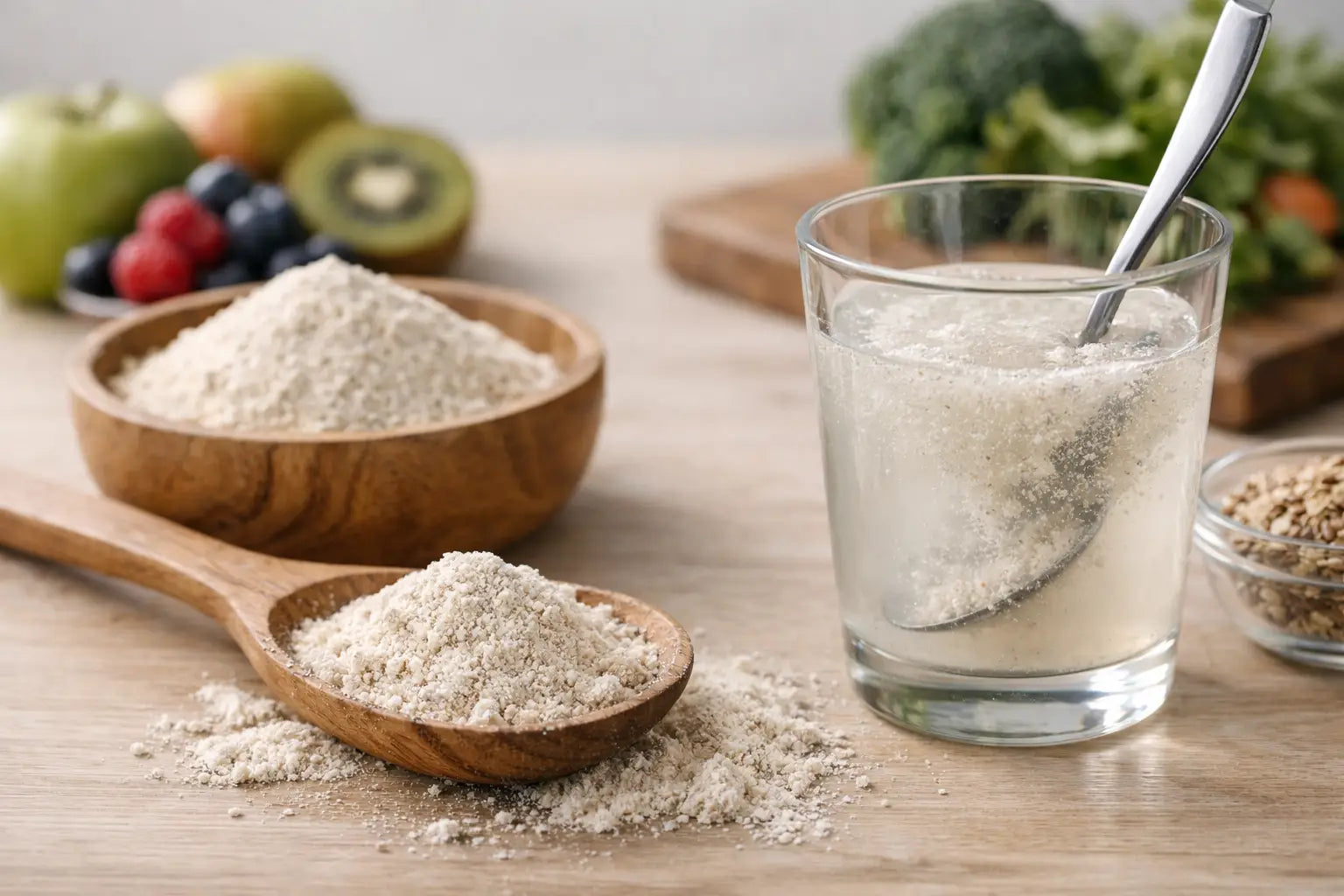
A varied diet remains the foundation. Nevertheless, many recognize the pattern: appointments, travel, cafeteria food, late dinners. Not every meal can be planned ideally. A neutral-tasting fiber mix can then help to make daily intake more consistent - for example, stirred into coffee, a smoothie, yogurt, or a meal.
At Innerpure, this is precisely the idea behind a clear fiber routine: not to replace nutrition, but to supplement it where daily life regularly creates gaps. Here, too, the rule applies: start slowly, drink enough, and pay attention to your own tolerance.
Gut health rarely comes from a single superfood. It grows with the small decisions you can repeat without negotiating with yourself. This week, choose one meal you eat every day anyway and add a fiber-rich component to it. This isn't a fresh start - but a ritual that can stick.