Anyone searching for "prebiotics vs. probiotics difference" usually isn't looking for a biology lesson – but a clear answer on what truly helps their gut. This is where it gets interesting: prebiotics and probiotics are often lumped together, but they work in completely different ways.
The short difference is: Probiotics are living microorganisms. Prebiotics are food components, mostly soluble fibers, that selectively feed beneficial gut bacteria. One introduces bacteria from the outside, the other supports those already living in your gut. Both can be beneficial – but not always for the same person, not in the same situation, and certainly not with the same expectations.
Prebiotics or Probiotics - the difference simply explained
Probiotics consist of specific bacterial strains or yeasts that are consumed in sufficient quantities to provide a health benefit. Examples include Lactobacillus or Bifidobacterium strains. You can find them in fermented foods or as supplements.
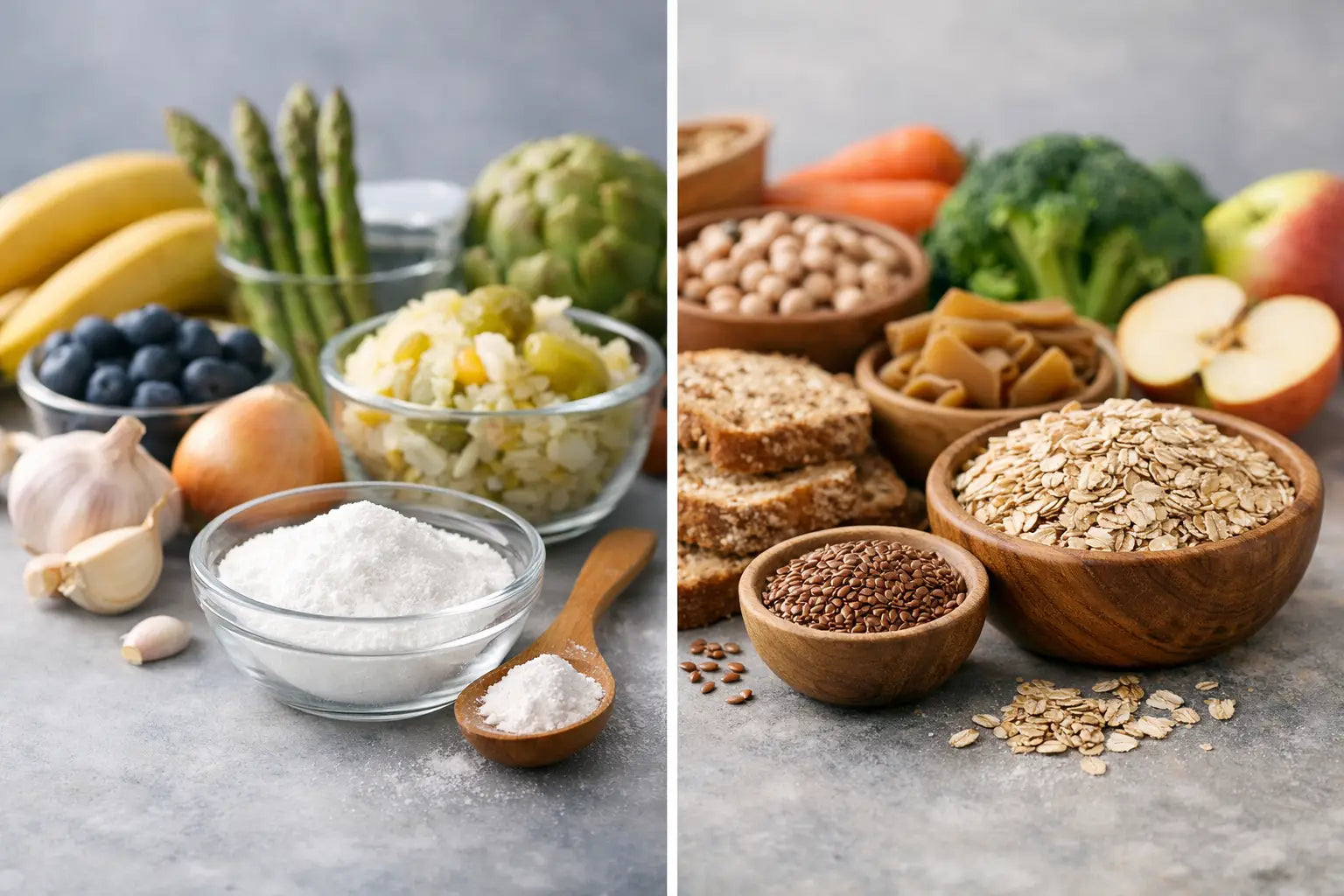
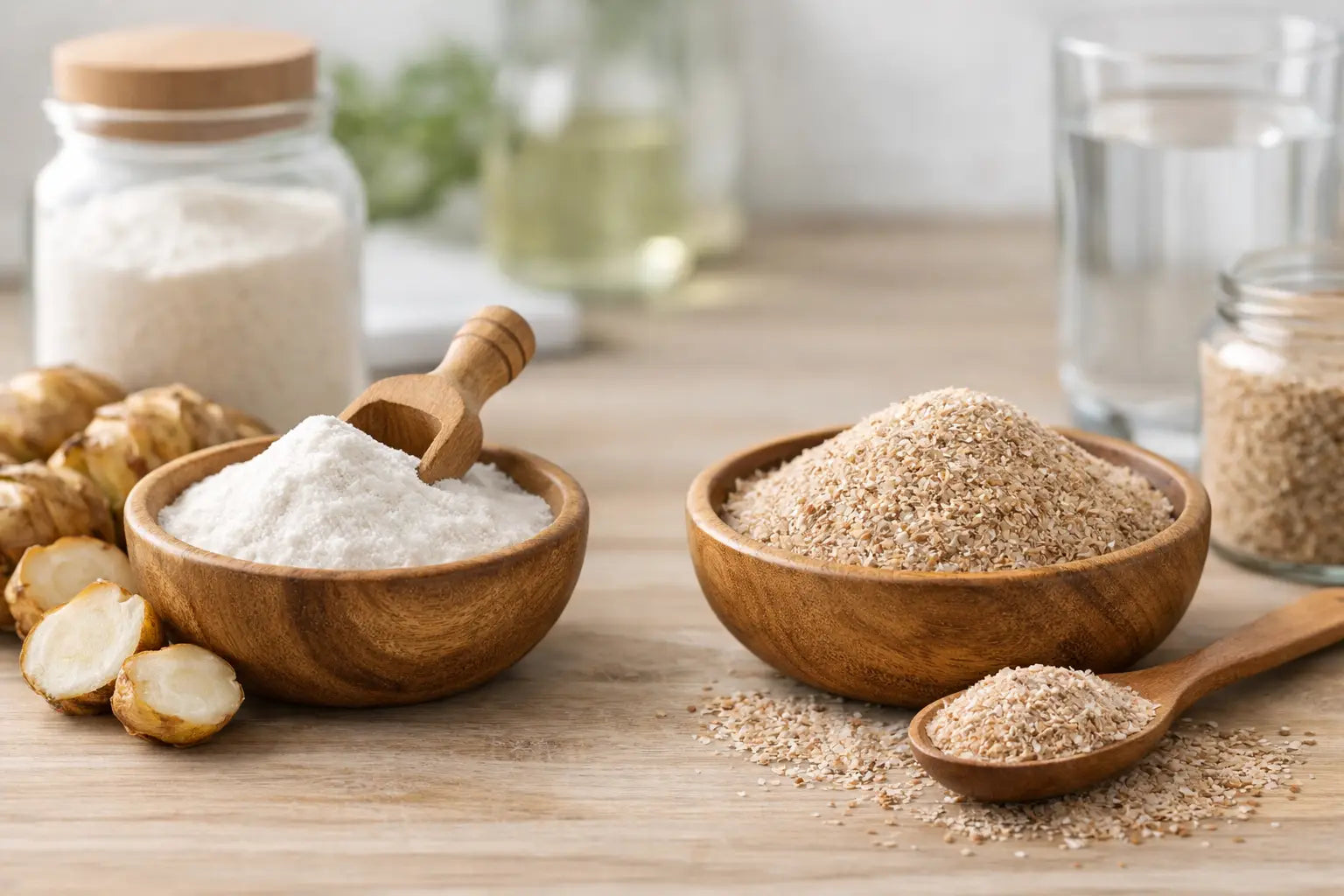
Prebiotics, on the other hand, are indigestible food components that are fermented by gut bacteria in the large intestine. Typical examples include inulin, resistant starch, psyllium husks, or other soluble fibers. They serve as a substrate for "good" bacteria and can thus influence the gut environment.
The difference is therefore not only technical but practically relevant. If you want to introduce specific strains to your microbiome in the short term, you look at probiotics. If you want to improve your daily foundation, i.e., the conditions in the gut, you often end up with prebiotics and generally with better fiber intake.
Why Prebiotics are often the more practical basis for everyday life
Many people are looking for a quick fix for bloating, irregular digestion, or the feeling that "the gut is out of balance." Probiotics initially seem more tangible because they contain specifically named bacteria. That sounds targeted. In practice, however, the matter is more complex.
Not every probiotic product contains the strains that have been studied for a specific goal. And even if it does, that doesn't automatically mean that the microorganisms reach the gut in relevant quantities or stay there long-term. The effect is often strain-specific, dose-dependent, and individually different.
Prebiotics take a different approach. They don't directly change which microbes you ingest, but rather support the environment in the gut. This is precisely what makes them so interesting for everyday life. Most adults in Germany eat far too little fiber. Closing this gap often does a lot for digestion, satiety, and metabolic health.
This is not hype, but a rather sober foundation. A gut microbiome needs not only "good bacteria" but, above all, the right food.
What prebiotics specifically do in the gut
When prebiotic fibers reach the large intestine, they are fermented by gut bacteria. This produces short-chain fatty acids such as butyrate, acetate, or propionate. These metabolic products are associated with various positive effects, for example, on the intestinal barrier, the gut environment, and certain metabolic processes.
It is important to note: Prebiotics are not automatically pleasant for everyone in every quantity. Especially if you have previously eaten very little fiber, a sudden high intake can lead to bloating or a feeling of fullness. This is not necessarily a sign that fiber is "not for you." Often it is more a matter of dosage or getting used to it.
That's why prebiotics often work best as a ritual rather than a radical change. Gradually increasing, drinking enough, taking it regularly – that's usually more sensible than an overzealous start.
When probiotics can be useful
Probiotics are not superfluous. There are situations in which they can be specifically interesting. They are particularly discussed around antibiotic intake, in certain forms of diarrhea, or in individual gastroenterological contexts. The specific strain and the available evidence for it are always crucial.
However, this is also the hurdle for consumers. "Probiotic" is not a seal of quality for every complaint. Two products can both contain probiotics and still have completely different efficacy profiles. Anyone with non-specific gut problems who simply chooses any product often buys hope rather than precision.
For a daily health routine without a clear medical reason, probiotics are therefore not automatically the first step. It is often more sensible to first check the basics: fiber intake, fluid intake, regularity of eating, exercise, sleep, and stress levels. The gut reacts to everyday life – not just to capsules.
Prebiotics or Probiotics difference in digestion and bloating
Especially with digestive issues, a closer look at the "prebiotics vs. probiotics difference" is worthwhile. Probiotics can help in certain cases if a clearly defined strain has been studied for a specific complaint. This is more targeted fine-tuning.
Prebiotics work more broadly. They promote the activity of beneficial gut bacteria and can positively influence stool consistency, regularity, and satiety. For people who eat too few vegetables, legumes, whole grains, or other fiber sources in everyday life, this is often the more obvious lever.
Bloating is a special case. Both prebiotics and probiotics can initially lead to increased bowel activity. The difference: With prebiotics, a lot depends on the quantity, fiber type, and increase. With probiotics, it depends more on the strain and individual tolerance. If you are sensitive, a slow start is almost always the better strategy.
Which is better - prebiotics or probiotics?
The honest answer is: it depends.
If your goal is a stable, everyday foundation for gut health, there are many reasons for prebiotics or for an overall better fiber intake. They address a supply gap that many people actually have. In addition, they can be easily integrated into a daily routine, for example, through fiber-rich foods or taste-neutral mixtures that fit into drinks and meals.
If it's about a very specific complaint, probiotics can also be useful – but ideally specifically selected and not based on the motto "more is more." More strains on the label do not automatically mean more benefit.
So it's not an either-or in the absolute sense. But the order is crucial. First the basics, then the special tool. Anyone who continues to eat a low-fiber diet but hopes for a probiotic often skips the more important step.
What to look for when buying
When it comes to prebiotics, it's worth looking at the composition. Not every fiber works the same. Some are particularly well tolerated, others much more fermentable. A combination of several soluble fibers can be useful in everyday life because it offers different functional properties and often fits better into routine and diet.
For probiotics, you should pay attention to specific strains, dosage, and intended use. General statements such as "for the gut flora" are often too vague. The more specifically the product is formulated, the better its suitability can be assessed.
And another point that is often overlooked: Tolerance trumps perfection. The most scientifically interesting product is of little use if you don't take it regularly or if it doesn't integrate well into your daily life.
How to effectively incorporate prebiotics into your routine
If you've only thought about fiber incidentally so far, you don't need a radical dietary change. Often a simple start is enough: a reliable daily source, a moderate dose, and a little patience. The gut loves consistency.
Practically, this means planning fiber not just for "healthy days," but so that it also works on stressful workdays. That's precisely why uncomplicated routines are so powerful. A taste-neutral fiber mix that fits into coffee, smoothies, yogurt, or porridge significantly lowers the barrier. At Innerpure, this very idea is central: not more complexity, but a clean solution for a real supply gap.
If you also incorporate more vegetables, legumes, nuts, seeds, and whole grains into your daily life, this complements it perfectly. Prebiotics from supplements should not replace a good diet, but they can help to implement it more realistically.
The most important question is often not which, but why
Anyone wavering between prebiotics and probiotics is usually looking for the right product. However, the more relevant question is often: What are you actually lacking right now?
If it's about a low-fiber diet, irregular digestion, and the feeling that your routine doesn't match your health standards, the answer is often surprisingly unspectacular – more prebiotic fiber, regularly and well tolerated. If, on the other hand, it's about a specific issue after antibiotics or a clearly defined complaint, a suitable probiotic can also make sense.
The gut rarely reacts to individual measures like a switch. It reacts to patterns. And that's precisely why the best choice is usually the one you can consistently follow every day.