If you suddenly experience bloating, irregular bowel movements, or a sensitive stomach after taking antibiotics, it's no coincidence. Those who want to rebuild their gut flora after antibiotics often quickly realize: a single yogurt or a probiotic for three days is usually not enough. The gut primarily needs time, suitable nutrients, and a routine that truly works in everyday life.
Antibiotics save lives and are indispensable in many situations. At the same time, they don't just act where they are needed. Depending on the active ingredient, duration, and individual initial situation, they can also significantly reduce beneficial gut bacteria. This is not a sign that antibiotics are "bad" – but a realistic side effect of effective therapy.
The good news: the microbiome is adaptable. Many people can stabilize their gut flora after antibiotics if they intelligently combine nutrition, regeneration, and daily stressors. That's exactly what this is about.
What happens in the gut after antibiotics
The gut flora, now mostly called the microbiome, consists of billions of microorganisms. They are involved in digestion, produce short-chain fatty acids, influence the gut barrier, and are in close exchange with the immune system. If this system gets out of balance, it can manifest in many ways – from digestive complaints to a generally "unsettled" gut feeling.
Antibiotics can temporarily reduce the diversity in the microbiome. Some bacteria recover relatively quickly, others more slowly. The extent of this effect depends on several factors: the antibiotic itself, the duration of intake, previous antibiotic courses, your diet, and the condition of your gut before treatment.
Therefore, there is no one-size-fits-all solution. Some people have stable digestion again after a few days. Others still notice weeks later that their gut reacts more sensitively than usual.
Rebuilding gut flora after antibiotics – what really matters
If you want to rebuild your gut flora after antibiotics, the most important lever is usually not the most spectacular product, but the foundation in everyday life. The microbiome needs food. And this food is primarily fiber – especially soluble and fermentable fiber that gut bacteria can utilize.
Many immediately focus on probiotics, i.e., living microorganisms. This can be useful, but it's only part of the picture. Without the right diet, the desired bacteria often lack the basis to establish themselves long-term. Simply put: probiotics may bring guests, but fiber sets the table.
Especially after antibiotics, a gentle but consistent buildup is often more sensible than a radical restart with an extremely high-fiber diet overnight. Those who consume very large amounts directly risk more bloating and discomfort. A gradual approach is better.
1. Increase fiber – but with caution
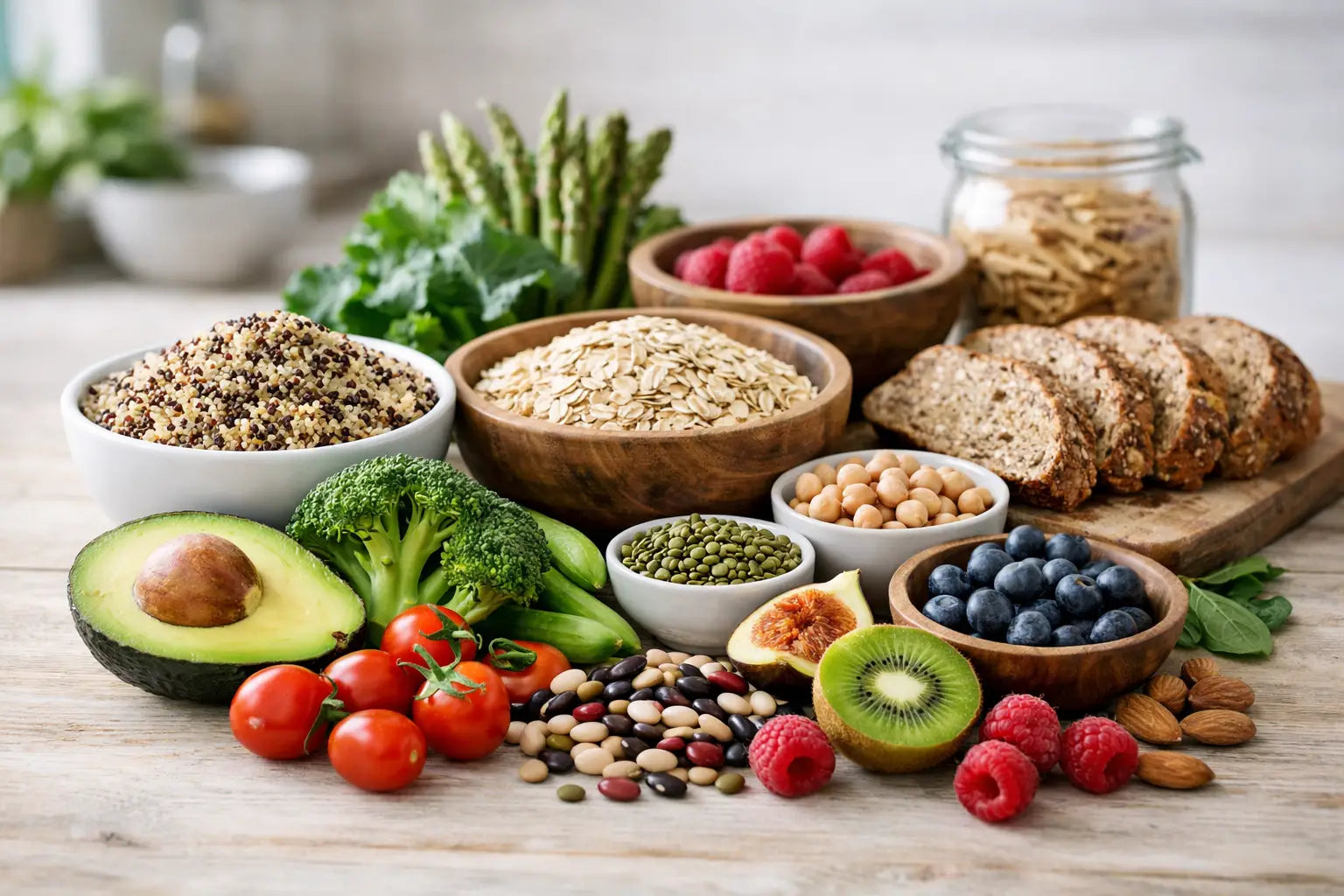
Fiber is one of the central factors for a stable microbiome. Particularly relevant foods include oatmeal, legumes, vegetables, fruits, nuts, seeds, and whole-grain products. Cooked and cooled potatoes or rice can also be interesting due to resistant starch.
The crucial factor is the dosage in relation to your current tolerance. If your stomach is sensitive right now, it may be useful to start with small portions and gradually increase them over days and weeks. This also includes sufficient fluids so that fiber is well incorporated into the gut.
Those who regularly consume too little fiber in everyday life – which is very common in Germany – often benefit from a simple supplement that can be consistently implemented daily. This is where routine becomes more relevant than perfection. A flavorless fiber solution that fits into drinks or meals can help realistically close the supply gap without having to completely overturn the entire meal plan.
2. Incorporate fermented foods sensibly
Fermented foods like natural yogurt, kefir, sauerkraut, or kimchi can supplement the diet. Depending on the product, they provide live cultures or metabolic products from fermentation. This is interesting, but not a guarantee for a quick "repair" of the microbiome.
Here too, regularity and tolerance are more important. If you react sensitively to fermented products, there's little point in eating them in large quantities out of obligation. Small, well-tolerated portions are often the better way.
3. Probiotics – useful, but not always automatic
Probiotics are often recommended after antibiotics. In fact, there is evidence that certain strains can be useful in certain situations, for example, to support during or after antibiotic therapy. At the same time, "probiotics" is not a uniform concept. Effect and evidence differ depending on the strain, dosage, and goal.
In practice, this means: an arbitrary product is not automatically suitable. If you want to use a probiotic, it's worth looking at the exact strain combination and the specific purpose of use. For persistent complaints or pre-existing conditions, medical consultation is advisable.
4. Don't stress the gut unnecessarily
After antibiotics, it's not only important what you consume, but also what you temporarily reduce. Highly processed, low-fiber diets, a lot of alcohol, and a consistently chaotic eating rhythm can unnecessarily hinder regeneration. This doesn't mean everything has to be perfect immediately. But a few quiet weeks with regular meals, enough sleep, and less "I'll eat something between two calls" often make more difference than expected.
How long does it take to rebuild gut flora after antibiotics?
It's worth being honest here: it depends. Some changes normalize within a few weeks, other processes take longer. Studies show that part of the microbiome can recover after antibiotics, but the composition doesn't always immediately return to its original state.
It is also relevant whether you took antibiotics once or more frequently. Repeated courses, chronic stress, a very low-fiber diet, or pre-existing digestive problems can slow down recovery. Conversely, a consistent, gut-friendly routine significantly improves the chances.
Those who expect quick results are often frustrated. The gut works more like a system that responds to consistency – not to activism for three days.
Everyday nutrition: What is really practical now
Theory helps little if it fails on Mondays in the office, Wednesdays at the gym, and Saturdays on the go. For most people, therefore, the perfect diet plan is not crucial, but a setup that realistically succeeds every day.
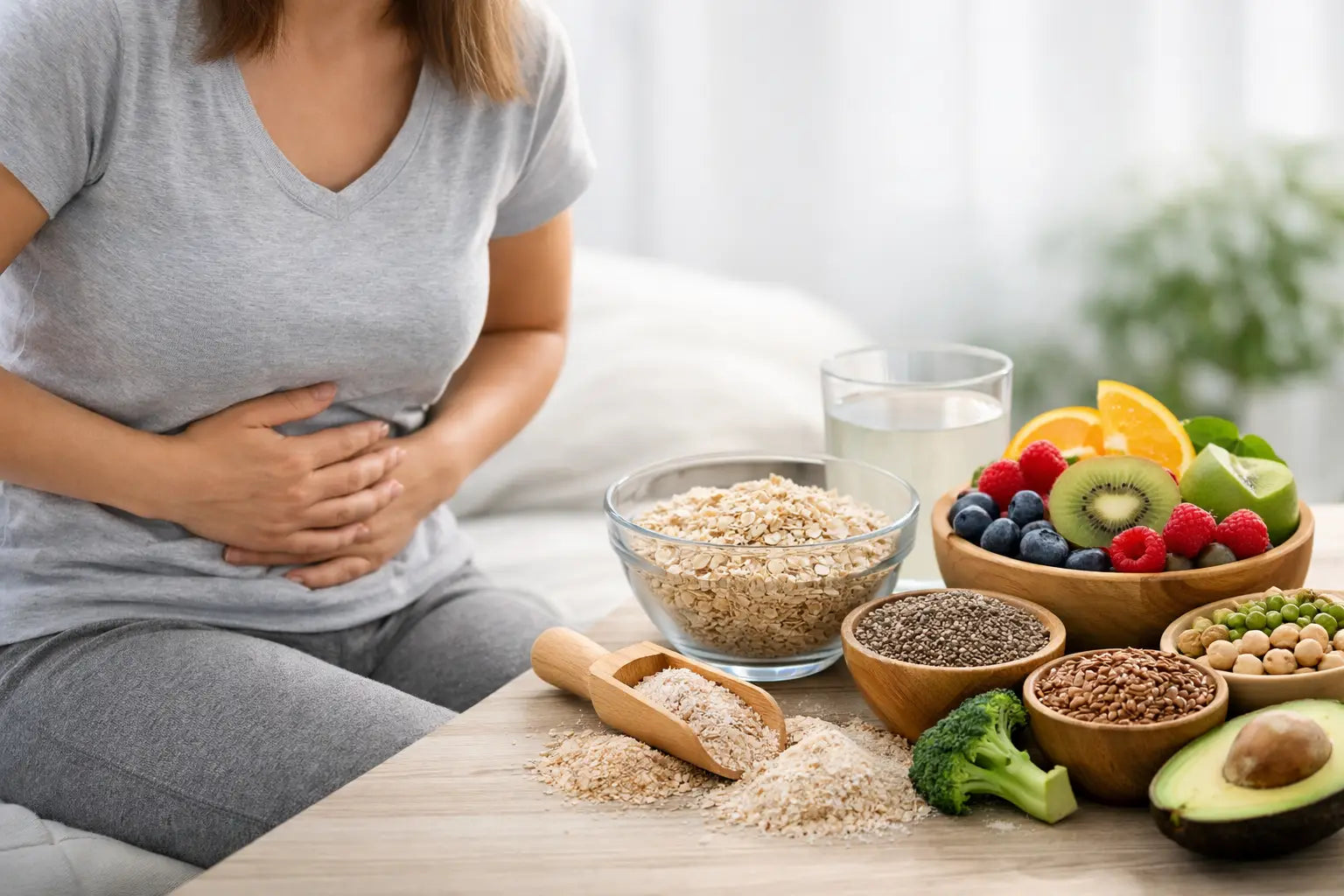
A good basic principle is to make every main meal a little more microbiome-friendly. In the morning, oatmeal, chia seeds, or berries can make a difference. At lunchtime, legumes, vegetables, and whole grains offer more than a quick white-carb standard. In the evening, a simple, balanced meal often helps more than constant snacking.
If you notice that you regularly fall short of the recommended fiber intake, an everyday supplement is not a shortcut, but often the most reasonable solution. Innerpure addresses exactly this: scientifically sound fiber supply that fits into a daily routine instead of making it more complicated.
When complaints are more than just "normal adjustment"
A sensitive gut after antibiotics is common. Nevertheless, not everything should be dismissed as a temporary reaction. If severe diarrhea, blood in the stool, fever, severe abdominal pain, or long-lasting complaints occur, medical clarification is needed. An individual assessment is also useful in cases of fungal infections, chronic inflammatory bowel diseases, or a history of irritable bowel syndrome.
The same applies if you suddenly react strongly to many high-fiber foods. Then "more" is not automatically the solution. Sometimes the gut needs stability first, sometimes a different selection of foods, sometimes medical diagnostics.
The most common mistakes when rebuilding gut flora
The first mistake is impatience. Those who change something for two days and then expect a complete effect underestimate the biology of the gut. The second mistake is black-and-white thinking: only probiotics or only diet. In practice, the combination of a good basic diet, sufficient fiber, and situationally appropriate supplements often works best.
The third mistake is overthinking. Starting immediately after antibiotic therapy with mountains of raw food, five supplements, and a strict diet regimen sounds motivated, but often doesn't feel that way for the gut. A smarter approach is a clear, calm buildup with things you will actually stick to.
So, if you want to rebuild your gut flora after antibiotics, you don't have to do everything at once. Often, it's enough to reliably give the gut what it most often lacks in everyday life: fermentable fiber, regularity, and a little less friction. Not spectacular, but precisely because of that, so effective.
Your gut doesn't need a perfect wellness routine after antibiotics, but reliable support that works even on normal, busy days.