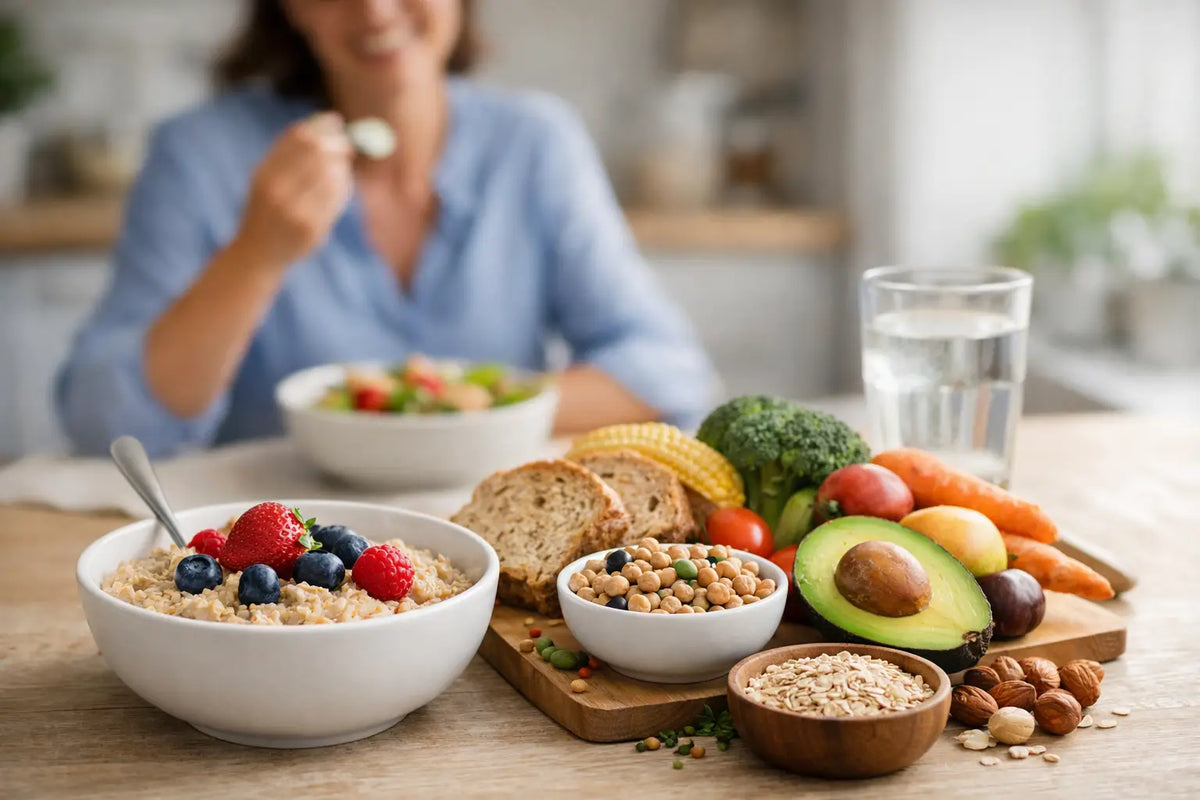
The coffee is ready, the calendar is already full – and breakfast needs to be quick. This is exactly where 10 ideas for a fiber-rich breakfast come in, which don't taste like deprivation and can realistically fit into your morning. Because a croissant to go or a sweet cereal breakfast often provides little fiber. With a few targeted ingredients, it becomes a meal that keeps you full longer and supports your daily gut routine.
The German Nutrition Society recommends at least 30 grams of fiber per day for adults. Many people do not reach this value. Breakfast doesn't have to make up for everything, but it can make a noticeable difference: those who incorporate about 8 to 12 grams in the morning can close their fiber gap much more easily throughout the day.
Why a fiber-rich breakfast changes so much
Fiber consists of plant-based food components that are not or only partially digested in the small intestine. Some swell with liquid and can help with satiety. Others serve as food for the bacteria in the large intestine. A varied mixture of whole grains, legumes, fruits, vegetables, nuts, and seeds is therefore more useful than a single miracle cure.
The pace is important: If you have previously eaten a rather low-fiber diet, gradually increase the amount. This allows your digestion to adapt. Drink plenty of fluids, especially if psyllium husks, flaxseeds, or a fiber powder become part of your routine.
10 Ideas for a Fiber-Rich Breakfast
1. Overnight Oats with Berries and Flaxseeds
Oats are an uncomplicated classic because they provide soluble fiber like beta-glucans. In the evening, mix oats with milk or a plant-based drink, yogurt, and a tablespoon of ground flaxseeds. In the morning, add a handful of berries and a spoonful of nut butter.
This combination keeps you full longer than a pure fruit breakfast and can be prepared well in advance. If you prefer it less sweet, use plain yogurt and add cinnamon instead of honey.
2. Yogurt Bowl with Pear, Bran, and Walnuts
Plain yogurt, Skyr, or an unsweetened plant-based alternative becomes a quick bowl with diced pear, two tablespoons of oat bran, and chopped walnuts. Pears provide pectin, a type of soluble fiber, while bran and nuts increase the texture and fiber content.
When buying pre-made granola, pay attention to the ingredients list. Many varieties mainly contain sugar and oil. Homemade mixtures of oats, nuts, and seeds are usually the clearer choice.
3. Whole Grain Bread with Hummus and Vegetables
Savory can be just as rich in fiber. Two slices of real whole grain bread with hummus, cucumber, tomato, and cress bring grains, legumes, and vegetables onto one plate. Optionally, a boiled egg or tofu can be added if you want more protein.
It is crucial that whole grain is truly the main ingredient. Dark bread is not automatically whole grain bread – color can also come from malt. A look at the description saves guesswork.
4. Chia Pudding with Kiwi and Almonds
Chia seeds swell in liquid and turn milk or plant-based drink into a creamy pudding overnight. Two tablespoons are usually enough for one serving. Kiwi and almonds add freshness, crunch, and more fiber.
Chia is practical, but not a must. If you are sensitive to very swelling foods, start with a smaller amount and drink a glass of water with it. Ground flaxseeds are an equally suitable everyday alternative.
5. Green Smoothie that Really Satisfies
A smoothie made from banana, berries, spinach, oats, plain yogurt, and water is more than a drink – provided the fruit is not juiced. The fiber is retained during blending. A small portion of oats or a tablespoon of nut butter makes it significantly more filling.
This is ideal for on the go. Nevertheless: if you prefer to chew, you can drink the smoothie as a supplement to a slice of whole grain bread. Liquid meals sometimes satisfy for less time, depending on the person.
6. Warm Porridge with Apple and Tahini
When it's colder outside, warm breakfast often feels particularly ritualistic. Cook oats with milk or a plant-based drink, grate an apple into it, and top everything with tahini, cinnamon, and a few pumpkin seeds. The apple softens during cooking, but remains a fiber source as a whole fruit.
Tahini brings a slightly tart note and is a good fit if sweet breakfasts quickly become too much for you. For more protein, you can stir in quark, Skyr, or soy yogurt after cooking.
7. Breakfast Burrito with Beans
Beans for breakfast are still underestimated in this country. Fill a whole grain wrap with black beans, scrambled eggs or tofu, bell peppers, avocado, and salsa. This is a good option for days with sports, long meetings, or a late lunch.
Legumes provide a lot of fiber, but can initially cause bloating if consumed in an unaccustomed quantity. Start with a smaller portion, rinse canned beans thoroughly, and gradually increase the amount.
8. Quark Cream with Plums and Oats
Mix quark or a plant-based alternative with a little milk, vanilla, and oats. Fresh plums, damsons, or soaked dried plums go particularly well with it. Dried plums are concentrated and therefore practical when there is little time in the morning.
A small portion is usually sufficient. Combined with oats, nuts, and enough liquid, it creates a breakfast that gently integrates your digestion into your daily routine.
9. Savory Porridge with Mushrooms and Spinach
Oats also work without fruit. Cook them with water or broth, sauté mushrooms and spinach in parallel, and top the porridge with an egg, sesame seeds, and a little lemon juice. This transforms the breakfast base into a warm, savory bowl.
This variation is particularly pleasant if you don't feel like anything sweet in the morning. It also shows: eating a fiber-rich diet doesn't mean eating the same muesli every day.
10. Your Usual Breakfast with a Fiber Upgrade
Not every morning needs a new recipe. Your standard breakfast can also be specifically supplemented: whole grain instead of white flour, fruit instead of juice, a spoonful of seeds in yogurt, or more vegetables on your bread. If food alone is not enough on hectic days, a taste-neutral mixture like Innerpure's Clear Fiber Blend can be added to drinks, yogurt, or porridge.
It does not replace a versatile diet. However, it can help maintain a consistent daily supply – especially when there is little time for elaborate meals between commuting, training, and appointments.
How an idea becomes a routine
The best breakfast idea is not the one with the most ingredients, but the one you can implement even on a Tuesday morning. Choose two sweet and two savory favorites, keep the basic ingredients at home, and prepare where it makes sense: overnight oats the evening before, chopped vegetables for two days, or cooked eggs in the fridge.
Don't plan for perfection. A breakfast with oats and berries is no less valuable just because it doesn't have five superfoods on it. Regularity, variety throughout the week, and adequate hydration are the factors that will sustain your gut routine in the long term.
Tomorrow, a small decision is enough: swap a white flour component for whole grain, add a spoonful of seeds, or include a portion of fruit. This way, fiber intake becomes not a project, but a ritual that simply runs alongside.