The coffee is brewing, the first message is already blinking, and breakfast once again consists only of a quick gulp. This is precisely where a guide to gut health for working professionals comes in: not with perfect meal plans, but with routines that work even between meetings, commutes, and deadlines. Because the gut doesn't react to good intentions on Sunday evening, but to what you do regularly in everyday life.
Many digestive problems don't arise from a single meal. Often, it's the sum of too little fiber, long meal breaks, hasty eating, insufficient fluids, and chronic stress. The good news: You don't have to organize your professional life around your digestion. Small, consistently implemented steps can make a noticeable difference.
Why the daily grind challenges your gut
A full calendar changes more than just the time you have for meals. Under stress, many people eat faster, chew less, and grab foods that are supposed to provide short-term energy but contain few satiating fibers. Added to this are long periods of sitting, irregular breaks, and the second or third coffee when concentration wanes.
The gut is closely connected to our nervous system. Stress can therefore affect digestion - for some by a sluggish feeling, for others by bloating, abdominal pressure, or more frequent bowel movements. This doesn't mean that every complaint is "just stress." Persistent, severe, or new symptoms should be medically evaluated. However, for the typical hectic everyday life, it's worth honestly looking at the controllable basics first.
Dietary fiber is particularly crucial. These are plant-based food components that are not completely digested in the small intestine. In the large intestine, certain fibers serve as a substrate for gut bacteria. At the same time, they can support stool volume and regularity. The German Nutrition Society recommends adults consume at least 30 grams of fiber daily. Many, however, do not reach this value in their working day.
The basis: Fiber without dietary perfection
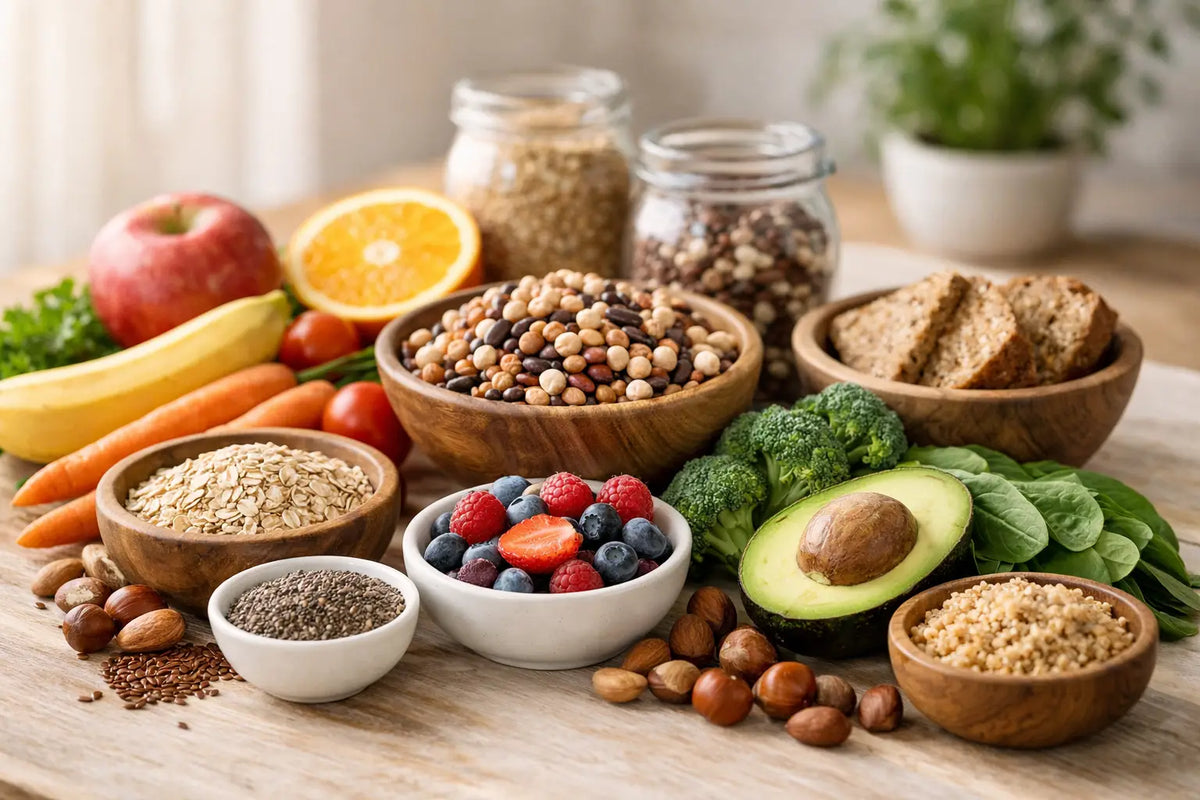
Eating a fiber-rich diet doesn't mean elaborate meal prepping every day. It starts with simple choices: oatmeal or whole-grain bread for breakfast, legumes in your lunch, vegetables and fruit as staple components rather than occasional side dishes. Nuts, seeds, and whole-grain products also help to increase your daily intake.
Consistency is key. If you eat very healthily on Monday and then live almost exclusively on snacks from Tuesday to Friday, you won't establish a stable foundation. A better approach: Choose two to three fiber-rich foods that genuinely fit into your daily routine and consciously repeat them. For example, breakfast with oats, lunch with vegetables and whole grains, and a fruit snack in the afternoon.
Increase fiber gradually. If you switch from very little to very much, bloating or a feeling of fullness may initially increase. This is not automatically a sign that fiber doesn't agree with you. The gut often needs time to adapt. Give your body one to two weeks, ensure adequate fluid intake, and adjust the amount more slowly if necessary.
Soluble and insoluble fiber: Why variety matters
Dietary fibers are not a uniform group. Soluble fibers form a gel-like structure with water and are found in oats, legumes, fruits, and certain plant fibers, among other things. Insoluble fibers are found, for example, in whole grains, vegetables, and nuts. Both have different properties and complement each other effectively in daily life.
Instead of sticking to individual superfoods, variety is the more pragmatic strategy. Different plant-based foods bring different fibers. For a healthy gut, a varied, long-term sustainable selection is usually more helpful than a short-term dietary hype.
How gut health fits into a busy workday
The best routine is one that isn't the first thing to fall by the wayside on stressful days. So, plan not for ideal conditions, but for your real calendar. If you have little time in the morning, you need a breakfast that's ready in three minutes. If you eat on the go, you need options you can choose without a kitchen.
A good starting point is an anchor moment in the morning. This could be a glass of water right after waking up, followed by a fiber-rich breakfast. If you don't like breakfast, you don't have to force yourself. Then the anchor could also be the first coffee in the office - supplemented by a prepared meal or a drink that meaningfully supports your fiber intake.
For lunch, a simple formula helps: a vegetable component, a satiating carbohydrate source, and a protein source. A salad alone can seem fresh, but often doesn't keep you full for long. Supplement it with whole grains, potatoes, beans, lentils, or chickpeas, as well as, for example, tofu, egg, fish, or yogurt. This creates a meal that provides energy more evenly and doesn't lead to reaching for snacks by 3 p.m.
In the afternoon, preparation is more important than willpower. When hunger suddenly strikes, what's available often decides. Fruit, nuts, whole-grain crackers, or yogurt with oats are not spectacular solutions. That's precisely why they work. They reduce the gap between what you intended to do and what is realistic on a long workday.
The practical guide to gut health for working professionals
You don't need ten new habits. First, focus on these four building blocks:
- Incorporate fiber daily: Intentionally include a plant-based fiber source with at least two meals—such as oats, whole grains, legumes, vegetables, fruits, or seeds.
- Drink enough: More fiber requires fluids. Water and unsweetened tea are the most reliable companions throughout the day.
- Truly use breaks: Even ten quiet minutes for a meal can help you eat slower and better perceive when you are full.
- Plan for movement: A short walk after lunch or taking calls while walking can get your circulation going and break up long periods of sitting.
When food alone isn't enough every day
Fresh foods remain the foundation. At the same time, daily life isn't always predictable. Some days consist of train journeys, client appointments, or a lunch chosen more for availability than nutritional quality. A tasteless fiber blend can then be a practical supplement—not as a substitute for vegetables and a varied diet, but as a reliable part of your routine.
Innerpure's Clear Fiber Blend, for example, can be easily stirred into water, coffee, smoothies, yogurt, or meals. The advantage lies not in a magical overnight effect, but in consistency: If a solution fits into your existing routine, you're more likely to sustainably close your fiber gap.
What often unknowingly hinders your progress
The most common mistake is trying to change too much at once. A radical diet change, more exercise, less coffee, and new supplements starting Monday sounds motivating, but is rarely sustainable. Instead, choose one habit you can reliably implement and expand on it after two weeks.
Also, "healthy" is not equally tolerable for all people. Legumes, raw foods, or certain fermentable carbohydrates can exacerbate symptoms in sensitive guts. There's no benefit in enduring at all costs here. Test quantities, preparation methods, and timings. Cooked vegetables, for example, may be better tolerated than large portions of raw food. For diagnosed intestinal diseases, severe pain, blood in stool, unintentional weight loss, or persistent changes in digestion: please seek medical clarification.
Perfection is not a goal for your gut. What's crucial is that you repeatedly give it what it needs in your working day: plant-based variety, sufficient fluids, some movement, and less eating on autopilot. Don't start tomorrow with a complicated plan, but with a single decision that has a place even on your busiest day.