Anyone who constantly juggles a full calendar, a snack drawer, and late dinners quickly realizes: losing weight often fails not due to a lack of knowledge, but due to everyday life. This is where the question of whether fiber helps with weight loss becomes interesting – because it doesn't target discipline, but rather the mechanisms behind it: satiety, blood sugar, digestion, and eating rhythm.
The short answer is: Yes, fiber can help with weight loss. But not as a trick, not in isolation, and not in the same way for every person. Its greatest advantage is that it influences several adjusting screws at once, without making everyday life more complicated.
How does fiber help with weight loss?
Fiber itself provides little to no usable energy, but it has a noticeable effect on eating behavior. Soluble fiber, in particular, binds water, swells in the intestine, and can thus contribute to meals being more filling for longer. Those who stay full longer often snack less, eat more structured meals, and are less likely to experience typical cravings in the afternoon or evening.
In addition, there is the influence on the blood sugar response. When a meal is digested more slowly, blood sugar usually rises less sharply. This is relevant because strong blood sugar fluctuations are associated with faster hunger, more appetite, and more difficult to control eating behavior in many people. So, fiber doesn't make you slim, but it can create conditions under which weight loss becomes more realistic.
Another point is energy density. Foods high in fiber often have more volume with a comparatively moderate calorie content. Vegetables, legumes, oats, berries, or whole-grain products fill the plate and stomach without the calories immediately following suit. This can help maintain a calorie deficit without feeling permanently restricted.
What happens in the body
It gets interesting in detail. Fiber is not just "good for digestion." Depending on the type, it works differently.
Soluble fiber, such as from psyllium husks, inulin, guar gum, or certain plant fibers, forms a gel-like structure with water. This can slow down gastric emptying and prolong satiety. Insoluble fiber from bran, vegetables, or whole grains tends to increase stool volume and support intestinal activity. Both are useful for weight loss, but in different ways.
In addition, there is the gut itself. A portion of the fiber serves as food for beneficial gut bacteria. During fermentation, short-chain fatty acids are produced, which are linked to metabolic processes, gut barrier, and partly also appetite regulation. This is not an immediate effect from one day to the next, but it shows why fiber is more than just a satiety add-on.
Does fiber help with weight loss or just with hunger?
The two are related. Most people don't gain weight because they lack a single nutrient, but because hunger, appetite, habit, stress, and availability are constantly working against each other. If fiber better regulates hunger, that's not a side effect, but often the actual lever.
Nevertheless, it would be too simplistic to say: more fiber equals weight loss. Those who also eat highly processed, energy-dense snacks, maintain large portion sizes, or generally move little will feel the effect only to a limited extent. Fiber supports the foundation, but does not replace it.
That's precisely why it's so interesting. It doesn't require a radical diet or perfect meal prep. It often improves the quality of the existing routine. For many, this is more sustainable than short-term rules that collapse after two weeks in a stressful everyday life.
How much fiber do you actually need?
The German Nutrition Society recommends around 30 grams of fiber per day for adults. Many people fall noticeably short of this. This is relevant because even a moderate supply gap can be enough to make meals less satiating and digestion slower.
If you start the day with coffee, eat something quick to go for lunch, and order protein plus something in the evening, you can easily end up with far too little fiber. The problem is not just the number on paper. It often shows up in everyday life: restless digestion, early hunger, a craving for sweets after eating, or a permanent feeling of never being completely full.
The best fiber sources for weight loss
For everyday life, theories matter less than options that really work. Foods that combine fiber density with good everyday usability are particularly helpful.
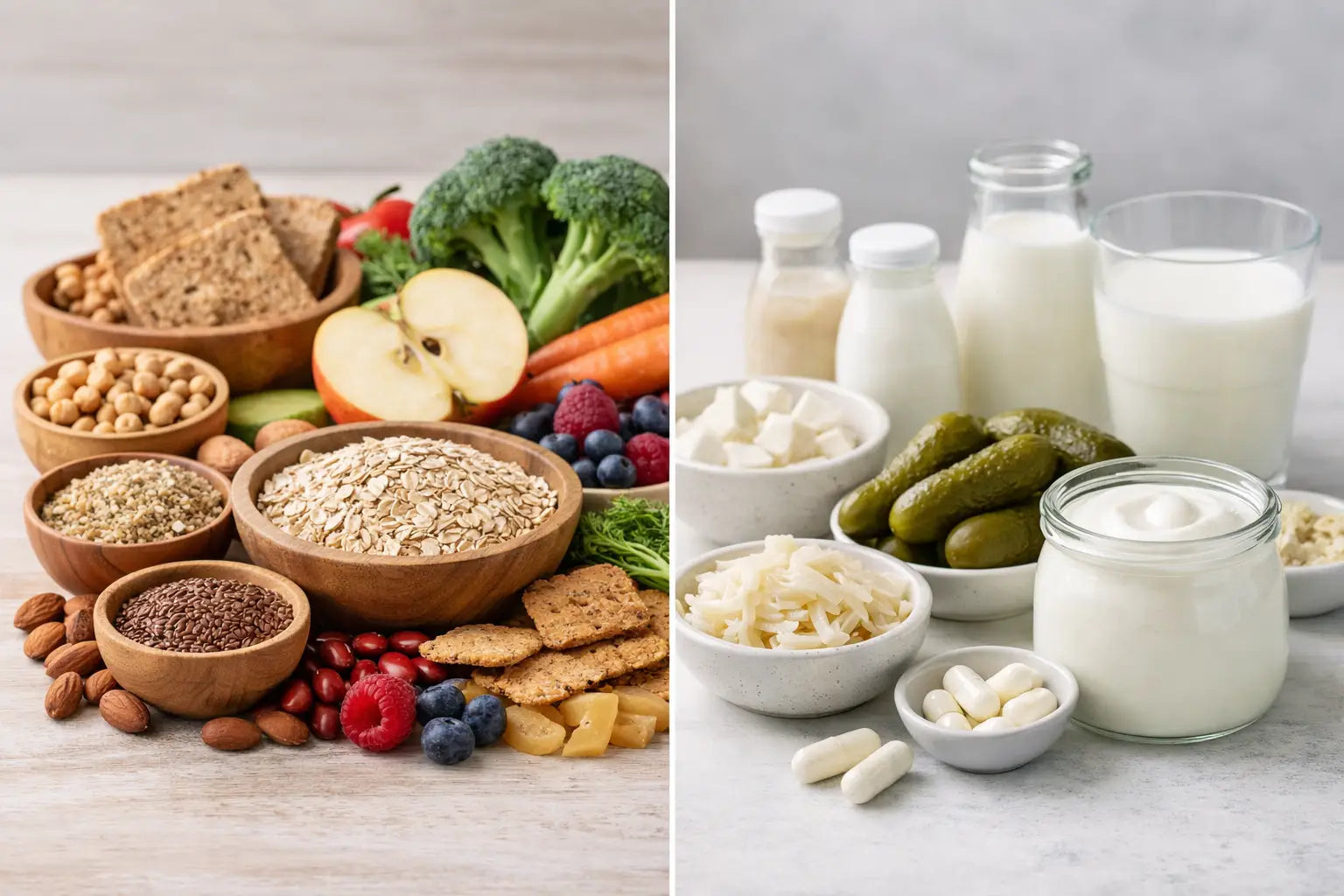
Oatmeal is a classic because it's filling, versatile, and easy to integrate into breakfast or baking. Legumes like lentils, chickpeas, or beans provide fiber plus protein – a strong combination for longer satiety. Vegetables, berries, apples, flaxseeds, and chia seeds are also useful if they occur regularly instead of occasionally.
Whole grain products can help, but not every whole grain option is automatically ideal. Some products have a healthy image but provide only moderately more fiber than the white variant. It's worth checking the nutritional values.
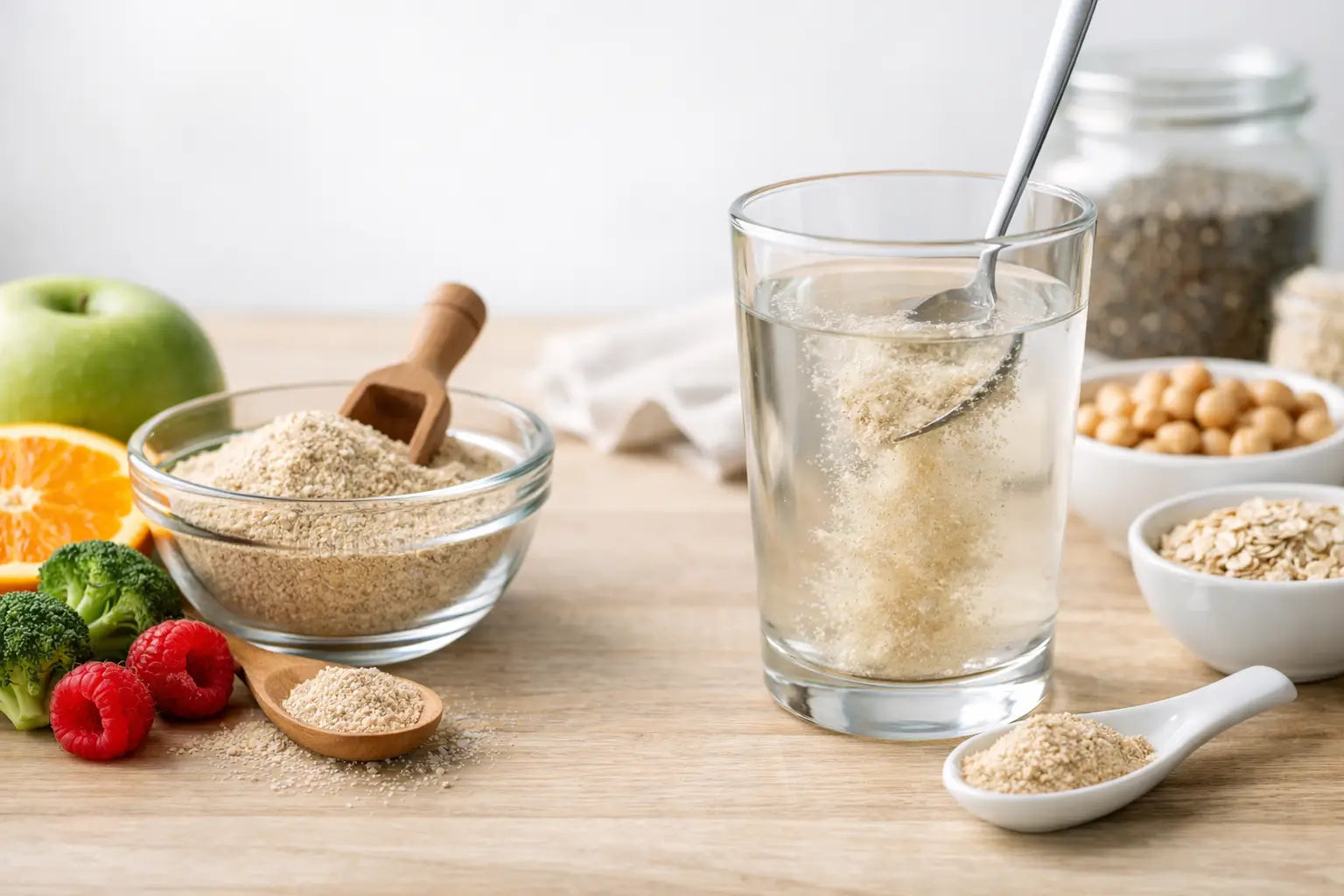
And then there are supplements. They are not a substitute for a balanced diet, but they can be practical if everyday life regularly leaves a gap. Especially taste-neutral, well-tolerated mixtures of soluble fibers are easier to establish as a daily ritual than complicated individual solutions. That's why modern routines don't just focus on "more vegetables," but on consistency.
What many people do wrong
The most common mistake is speed. Those who switch from very little fiber directly to very much often notice it quickly – bloating, pressure, or restless digestion. The intestine needs some time to adapt. It is better to increase gradually over several days or weeks.
The second mistake is too little fluid. Fiber, especially swelling fiber, needs water. Without sufficient fluid intake, the desired effect on digestion and well-being may not occur.
The third mistake is false expectations. Fiber supports weight management, but it does not neutralize a permanent calorie surplus. Those who see it as a silent helper in an overall sensible routine are closer to reality – and usually also closer to long-term success.
How to integrate more fiber without dietary stress
The most effective strategy is rarely the most spectacular. If you want to use fiber for weight loss, you don't need a complete dietary overhaul. You need more regularity.
Start with a meal you eat almost every day. This could be a breakfast with oats, yogurt, and berries, or a lunch where you specifically add vegetables and legumes. A taste-neutral fiber product in coffee, a smoothie, yogurt, or porridge can also be useful if it fits your routine and is actually used daily.
It is crucial that the solution fits your real life. Someone who travels a lot needs different strategies than someone who cooks fresh food every day. Those who are sensitive to certain fibers should start gently and pay attention to tolerance. The perfect diet doesn't win, but the one that works permanently does.
For whom fiber can be particularly helpful
People who struggle with cravings, irregular meals, or a strong tendency to snack often benefit particularly. Also, those who get hungry quickly after eating or feel that they only control portions with willpower can feel a difference with more fiber.
They are also helpful in phases where weight loss is not thought of aggressively, but sustainably. That is, when you don't want to lose five kilos as quickly as possible, but want to build your routine in such a way that less counter-steering is necessary. This is where the real value arises: less friction in everyday life, more satiety, more stability.
However, for existing gastrointestinal diseases or very sensitive digestion, the selection should be individually appropriate. Not every fiber is ideal for every person. Tolerance is not a detail, but a prerequisite for a routine that lasts.
The real lever is not abstinence
The question "Does fiber help with weight loss?" ultimately leads to something fundamental. Successful weight management rarely results from stricter rules. It is more likely to arise when your everyday life makes you work less against your goals.
Fiber is so interesting for this reason because it doesn't rely on abstinence, but on better conditions. More satiety. Less roller coaster eating. Digestion that plays along. And a routine that remains realistic even on long days.
So, if you're not looking for another diet, but a smarter lever for every day, this is exactly where it's worth looking. Not perfect, not radical - but in a way that puts your body more on your side.