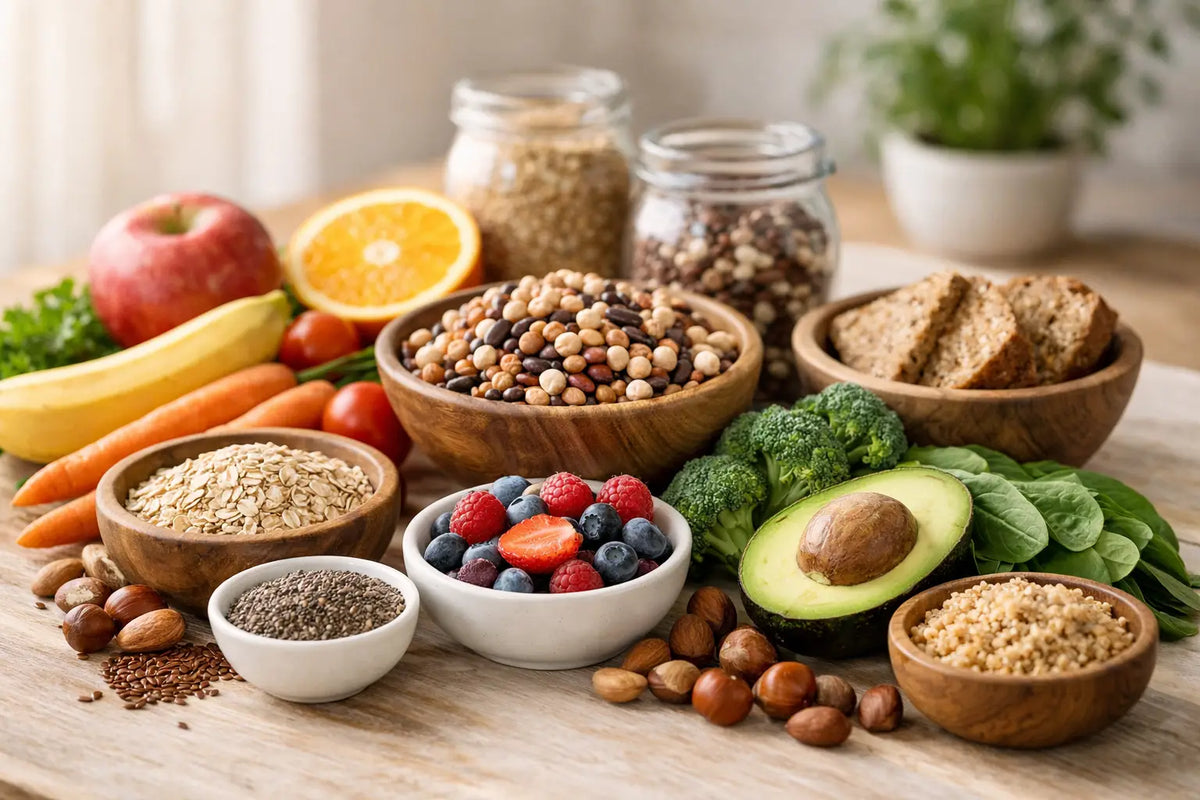
An apple for breakfast, whole-grain bread for lunch, and suddenly your stomach feels tight? Fiber for a sensitive stomach is not a contradiction. Often, it's not just the amount, but primarily the type of fiber, the pace of the change, and your personal digestive routine that matters. Changing too much too quickly can exacerbate bloating, a feeling of pressure, or irregular bowel movements. With the right strategy, however, fiber can become a valuable part of a calm, reliable routine.
Why fiber can initially challenge your gut
Fiber consists of indigestible components of plant-based foods. It largely reaches the large intestine, where it affects stool volume, binds water, and serves as food for certain intestinal bacteria. These very properties make it so relevant for digestion, satiety, and a balanced diet.
However, a sensitive stomach often reacts to changes. If fiber intake is significantly increased from one day to the next, more fermentable material encounters the gut flora. Gas, among other things, is produced during this process. This is fundamentally a normal process, but it can feel uncomfortable—especially for people who have previously eaten a low-fiber diet or are prone to irritable bowel symptoms.
The origin also plays a role. While onions, legumes, or larger quantities of wheat bran provide fiber, depending on the food, they also contain FODMAPs: short-chain carbohydrates that can promote symptoms in some people. This does not mean that these foods are inherently bad. It means: tolerance is individual, and the appropriate fiber source should be chosen carefully.
Fiber for a sensitive stomach: Which types are often better suited
Fiber is often divided into soluble and insoluble varieties. In practice, this distinction is not always clear-cut, but it helps with orientation.
Soluble fiber forms a gel-like structure with liquid. This includes, for example, psyllium husks, some guar gum, pectin from fruit, and beta-glucans from oats. They can make stools softer and more pliable and are often perceived as a gentle introduction. Nevertheless, even soluble fiber requires slow acclimatization.
Insoluble fiber is found in whole grains, bran, nuts, seeds, and many vegetables. It can increase stool volume and stimulate bowel movements. For some people, this is helpful, but in cases of acute irritation, a lot of gas in the abdomen, or very frequent bowel movements, large amounts of coarse bran or raw vegetables can initially be too much.
Often, a mixture is more sensible than a single, highly dosed substance. Different fibers are processed at different points in the intestine and have different properties. The goal is not to reach the highest amount as quickly as possible, but to find a selection that feels good every day.
Not every "healthy" classic is immediately the best choice
A raw vegetable salad, beans, and whole-wheat pasta can be nutritionally beneficial. If your stomach reacts sensitively, however, this meal may not be the ideal starting point. Cooked vegetables are often better tolerated than large portions of raw food. Oatmeal can be more pleasant than coarse bran. And small amounts of legumes, thoroughly rinsed and well cooked, are usually a more realistic experiment than a large bowl.
It's not about abstaining. It's about giving your system enough time so that a good intention becomes a stable habit.
How to increase your fiber intake without overdoing it
The German Nutrition Society recommends at least 30 grams of fiber daily for adults. Many people consume significantly less in their daily lives. For those who start with a low intake, this recommendation should therefore be understood as a direction—not as a daily task for tomorrow.
Start with a small, clear change and maintain it for a few days. This could be a portion of oats for breakfast, an extra portion of cooked vegetables, or a small amount of a soluble fiber powder in your usual drink. If your stomach remains calm, you can gradually increase the amount. If symptoms occur, take a step back and stay there longer. This is not a setback, but good body feedback.
It is also helpful to distribute intake throughout the day. A very high-fiber meal in the evening can cause more pressure than several moderate portions. Regular meals, eating calmly, and thorough chewing also help. Those who eat hastily often swallow more air—and easily mistake the consequence for an intolerance to fiber.
Drinking is part of the routine
Fiber binds water. Especially with psyllium husks or other swelling fibers, sufficient fluid intake is therefore important. A large glass of water with each portion and regular drinking throughout the day are a good framework. How much you need in total depends, among other things, on body size, activity, temperature, and diet.
However, drinking more is not a free pass for a very rapid dose increase. If the amount of fiber increases too abruptly, even a good drinking routine cannot completely prevent symptoms. Slowness remains the decisive factor.
A tolerable daily rhythm instead of a perfect diet plan
A sensitive digestive system usually benefits from repetition. You don't have to test a new superfood every day. A simple ritual that fits your life is better: breakfast with oats and berries, a vegetable component at lunch, a well-tolerated side dish in the evening such as potatoes, rice, or whole grains—depending on what suits you.
If you find it difficult to reliably close your fiber gap through food, a neutral-tasting fiber mix can be a practical supplement. It can be integrated into water, coffee, smoothies, yogurt, or porridge and makes daily intake more predictable. Innerpure's Clear Fiber Blend uses several soluble fibers for this purpose and fits into a routine without making meals more complicated.
It remains important: a supplement does not replace a varied diet. Plant-based foods provide vitamins, minerals, and phytochemicals in addition to fiber. However, a supplement can help to meaningfully narrow the gap between aspiration and a busy everyday life.
What you can specifically check for bloating and abdominal pressure
If symptoms occur, a quick reality check is worthwhile. Often, the amount of fiber alone is not responsible, but rather the combination of several changes: more raw food, new protein bars with sugar alcohols, larger portions of legumes, and less time to eat. Therefore, try to change only one variable at a time.
A short food diary for one to two weeks can reveal patterns. Note not only foods and amounts, but also time, stress level, cycle phase, sleep, and symptoms. Stress in particular can affect the gut-brain axis and make digestion noticeably more sensitive. This way, you are more likely to find out if, for example, a portion of oats is really the problem—or if a hectic workday with few breaks plays a role.
For constipation, a cautious increase in soluble fiber can be helpful. For diarrhea, severe bloating, or a known irritable bowel diagnosis, the optimal selection is more individual. In such cases, it can help to temporarily reduce highly fermentable foods and seek professional dietary guidance. A strict, long-term FODMAP restriction on your own is not a good long-term solution because it can unnecessarily restrict dietary diversity.
When medical advice is advisable
A sensitive stomach is often functional and can be well influenced. However, new, strong, or persistent symptoms should still be medically clarified. This applies particularly to these warning signs:
- Blood in the stool or black stool
- Unintended weight loss
- Severe nighttime pain or symptoms that wake you up
- Persistent diarrhea, fever, or significant loss of performance
Your stomach does not have to adapt to a perfect diet. The better solution is a diet that adapts to your stomach: start small, observe carefully, and make a well-tolerated portion a daily ritual.