A large salad for lunch, wholemeal bread in the evening, and suddenly your stomach feels tight: fiber and bloating seems like a contradiction at first glance. Yet, fiber is rarely the actual problem. Often, it's not the "what" but the "how" that matters: which types of fiber you eat, how quickly you increase the amount, and how well your gut is accustomed to the change.
For long-term good digestion, fiber is a strong building block. The German Nutrition Society recommends adults consume at least 30 grams per day. Many people fall significantly short of this. If you then try to close this gap spontaneously with very large portions of whole grains, legumes, or raw vegetables, you put a strong challenge on your gut all at once. The result can be more gas – and this can usually be managed much more comfortably.
Why fiber can cause bloating
Fiber is not or hardly digested in the small intestine. It reaches the large intestine, where gut bacteria ferment a portion of it. This produces short-chain fatty acids, which are valuable for the gut barrier and metabolic processes. However, gases such as hydrogen, carbon dioxide, and in some people, methane, are also produced. A certain amount of these is completely normal.
Therefore, bloating does not automatically mean that fiber doesn't agree with you. Rather, it can indicate that your microbiome is currently processing more fermentable material than usual. This becomes particularly noticeable if the daily fiber intake increases rapidly or if the gut is already sensitive, for example, during stressful periods, with irregular eating habits, or after an infection.
The individual composition of the microbiome also plays a role. Two people can eat the same portion of lentils and react completely differently. Therefore, there is no single solution for everyone, but a good strategy: test slowly, observe patterns, and build up your routine accordingly.
Soluble and insoluble fiber: The difference matters
Not all fiber behaves the same way in the gut. Soluble fiber binds water and, depending on the type, forms a gel-like structure. It is found, for example, in oats, barley, psyllium husks, flaxseeds, apples, and citrus fruits. Many people find it particularly easy to integrate when introduced gradually. It can also help to make stools softer and more regular.
Insoluble fiber is found primarily in whole grain products, bran, nuts, seeds, and many vegetables. It increases stool volume and can stimulate bowel movements. This is generally beneficial, but with a sensitive stomach or an abrupt change, it can quickly lead to a feeling of pressure.
The key is not to avoid one group. A varied mix supports the gut best in the long term. However, if you are currently frequently bloated, it may be sensible to initially focus on well-tolerated, soluble sources and gradually introduce coarser, very large portions.
Fermentable does not mean poorly tolerated
Some fibers are particularly intensively fermented by gut bacteria. These include inulin from chicory or certain fructans from onions, garlic, and wheat. They can be valuable food for beneficial gut bacteria. However, in sensitive digestion, they can exacerbate symptoms in high doses.
This does not mean that these foods must be completely eliminated from the diet. It means: the portion makes the difference. For example, someone who combines large amounts of chicory, onions, and legumes in one day gives the gut a different task than someone who deliberately incorporates a small amount into a balanced meal.
Increasing fiber intake with bloating
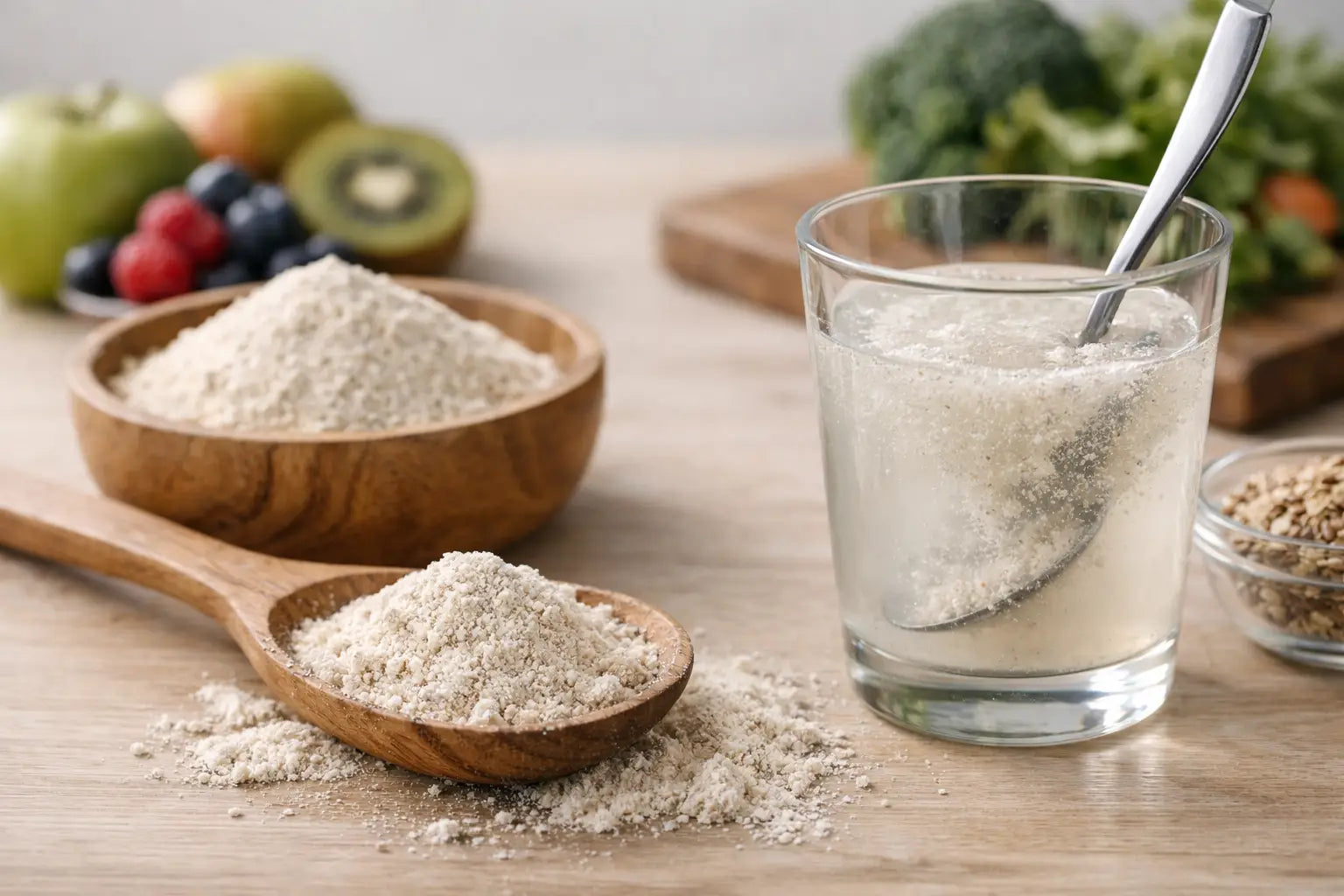
The most effective measure is surprisingly unspectacular: slow down. Instead of changing everything overnight, increase your fiber intake over several weeks. Even an additional small portion per day can be a good start – such as some oats in your breakfast, a portion of vegetables with lunch, or a spoonful of flavorless fiber in your drink.
Stay at a new amount for a few days before increasing further. This allows your digestive system to adapt, and you'll better understand what works for you. If symptoms significantly increase, take a step back instead of completely eliminating fiber. Often, the dose is simply too high.
Drinking enough is essential. Fiber binds water. Those who eat more fiber but drink too little fluid may feel sluggish or bloated. Water, unsweetened tea, and fluids from meals count. A rigid liter amount doesn't suit everyone, but light-colored urine and regular bowel movements are good everyday indicators.
Preparation also makes a big difference. Cooked vegetables are easier for many stomachs than a large raw vegetable platter. Oatmeal as porridge can be more pleasant than dry muesli. Legumes are often better tolerated if they are well rinsed, thoroughly cooked, and initially eaten in small quantities. Canned lentils or chickpeas are a practical option for everyday use.
This is what a gentle fiber routine looks like
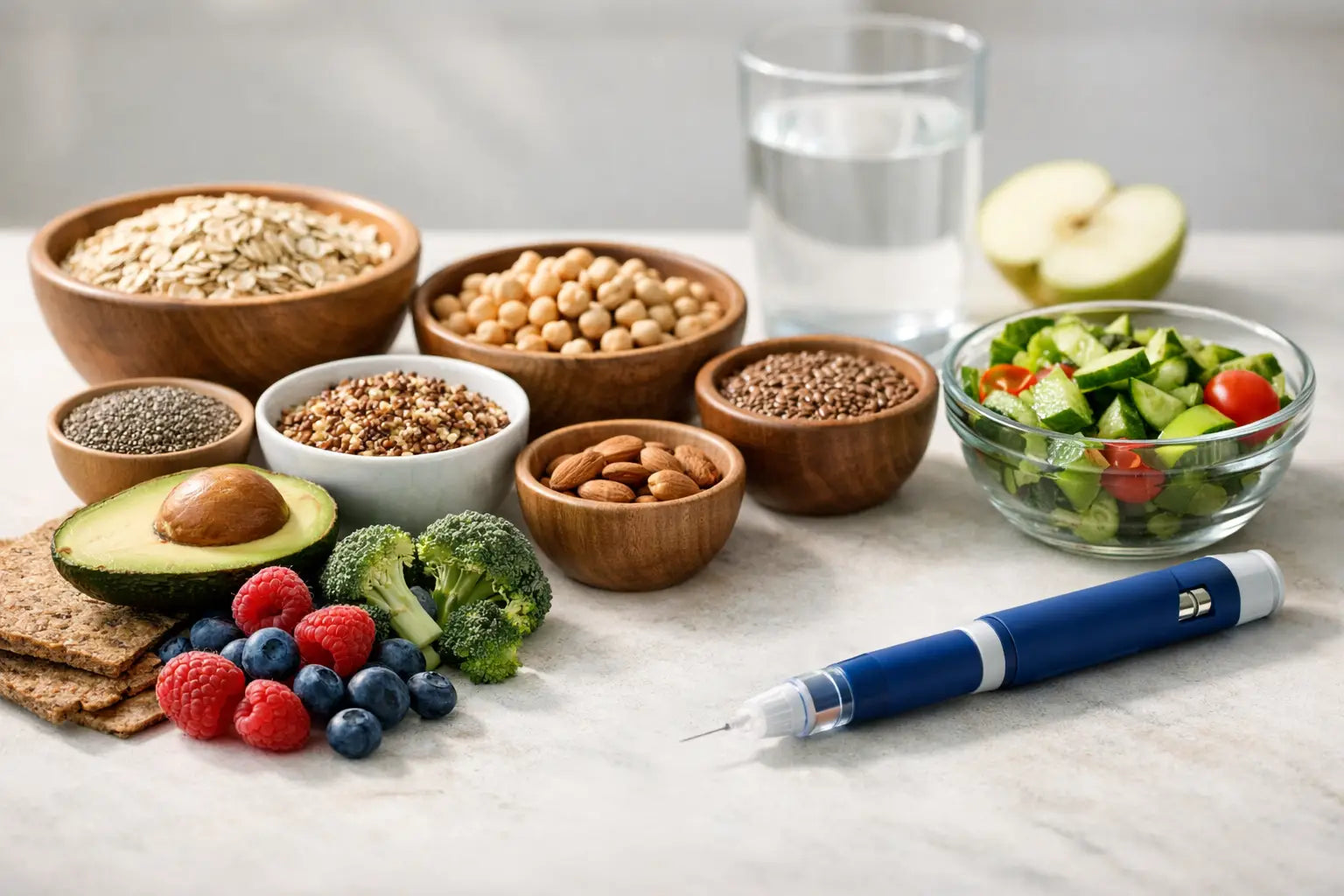
A tolerable routine doesn't have to be complicated. It arises from small, repeatable decisions. For breakfast, there could be porridge with berries. At lunch, you could supplement a warm bowl with cooked vegetables and a moderate portion of whole grain rice. In the evening, potatoes, oven-baked vegetables, and a dip with herbs are often lighter than a very large, high-fiber meal.
If you are using a fiber powder, the same principle applies: start small and increase the amount according to tolerance. A mixture of different soluble fibers can make everyday life easier because it can be integrated neutrally in taste into coffee, smoothies, yogurt, or meals. The Clear Fiber Blend from Innerpure is formulated precisely for this daily ritual – not as a substitute for a varied diet, but as a simple support to close the fiber gap step by step.
Don't be overly critical of every small change. The gut also reacts to lack of sleep, menstrual cycle, stress, eating too quickly, and carbonated drinks. More helpful than daily brooding is a quick look at patterns over one to two weeks: When does bloating occur? What new amount was introduced? How quickly did you eat? This information is more meaningful than individual days.
What can help with acute abdominal pressure
If your stomach is currently tight, you don't have to immediately ban all high-fiber foods. Often, it helps to switch to simpler, cooked meals for one to two days and reduce very gas-forming combinations. A walk after eating supports natural bowel movement. Eating more slowly and chewing thoroughly can also be noticeable, as hasty eating often leads to swallowing more air.
Also, check seemingly healthy habits: very large smoothies, protein bars with sugar alcohols, a lot of chewing gum, or carbonated drinks can exacerbate bloating independently of fiber. If you find an adjustment screw here, you often don't have to change your fiber routine much at all.
When bloating should be medically evaluated
Occasional bloating is normal. However, if it occurs new and persistently, is very painful, or changes significantly, a medical clarification is worthwhile. This applies particularly to unintentional weight loss, blood in the stool, fever, nocturnal symptoms, persistent diarrhea or constipation, and a family history of intestinal diseases.
In cases of diagnosed irritable bowel syndrome, chronic inflammatory bowel diseases, or after certain surgeries, individual counseling by a doctor or qualified nutritionist is advisable. A temporarily adjusted selection of fermentable carbohydrates can then be useful but should not lead to a permanently unnecessarily restricted diet without guidance.
Your stomach does not have to get used to a radical change in diet. Instead, give it small, reliable signals: a little more fiber, sufficient fluids, regular meals, and time. Precisely these calm repetitions create a routine that doesn't feel like deprivation, but like an everyday life that is good for you.